
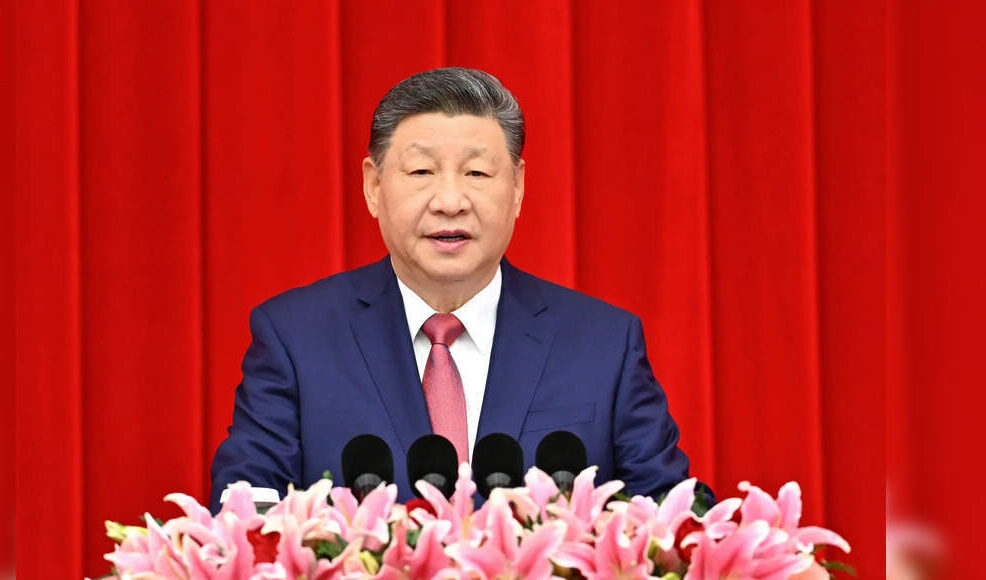
Xi Jinping New Year address Nvidia Trump: What the Speech Says (and Doesn’t Say)
Estimated reading time: 7 minutes
Key Takeaways
- President Xi Jinping’s 2026 New Year address did *not* explicitly mention Nvidia or Donald Trump.
- The speech emphasized “self-reliant innovation in core technologies” and “strengthening the domestic chip supply chain,” significant for tech companies like Nvidia.
- Broader statements on “peaceful development” and “mutual respect” signal China’s diplomatic stance towards the US, relevant for any administration, including a potential Trump presidency.
- The absence of direct mentions is a strategic diplomatic choice, prioritizing broad policy communication over specific endorsements or criticisms.
- Nvidia and Donald Trump have not issued public responses to the speech as of early 2026.
- The address signals China’s continued commitment to technological independence and stable international relations.
Table of contents
- Xi Jinping New Year address Nvidia Trump: What the Speech Says (and Doesn’t Say)
- Key Takeaways
- The Context of Xi’s 2026 New Year Address
- Direct References to Nvidia – What the Speech Actually Says
- Direct References to Donald Trump – What the Speech Actually Says
- Broader Analysis – Why the Absence (or Subtlety) Matters
- Reactions & Responses – What Has (and Hasn’t) Been Said
- Implications for US-China Relations & the Tech Sector
- Conclusion – Recap & Forward-Looking Takeaways
Each year, the world eagerly watches for the Xi Jinping New Year address Nvidia Trump and the broader international messages it conveys. The annual New Year address by the Chinese President is not just a ceremonial speech; it’s a crucial barometer for global diplomacy and economic trends. It offers insights into China’s priorities for the coming year, influencing everything from trade policies to technological advancements. This year’s speech, delivered by Chinese President Xi Jinping on December 31, 2025, has drawn particular attention due to its timing amidst complex geopolitical landscapes.
The official transcript of the address was published swiftly on state media, providing a detailed look at its content (source 1; source 2). Many observers and stakeholders, including technology giants and political strategists, were keen to see what specific references, if any, would be made to key players like Nvidia and figures such as Donald Trump. This blog post aims to answer your main questions: what exactly was said, what was *not* said, and why these deliberate choices matter for global commerce and politics.
The Context of Xi’s 2026 New Year Address
Understanding the significance of the 2026 New Year address by Xi Jinping on US China relations requires a look at its traditional structure and the current global situation. President Xi’s annual messages typically follow a clear pattern. They begin by celebrating domestic achievements from the past year, highlighting national progress and economic milestones. Following this, the speeches outline the country’s vision and strategic goals for the future, often touching on innovation, development, and social welfare. Finally, they usually include pronouncements on international cooperation, global governance, and China’s role on the world stage. This year was no exception.
The backdrop to this address is particularly charged. The world is navigating an intense US-China tech rivalry, which has seen both nations implement various export control measures, particularly concerning advanced semiconductors and artificial intelligence (AI) technologies. These restrictions significantly impact companies like Nvidia, a leading designer of graphics processing units (GPUs) essential for AI. Moreover, the approaching US election cycle, with potential changes in leadership, adds another layer of complexity to the US-China relationship. Against this backdrop, every word, and indeed every omission, in the Xi Jinping speech Nvidia and Trump analysis takes on amplified meaning. The global community was keenly listening for subtle signals that might hint at future policy directions or diplomatic shifts in these critical areas (source 1; source 2). For a deeper understanding of the geopolitical landscape influencing these discussions, see our analysis on Trump’s Russia oil claim and China’s rare earth move.
Direct References to Nvidia – What the Speech Actually Says
Many in the tech industry eagerly sought to discover what Xi Jinping said about Nvidia in New Year speech. The most direct answer is that the speech contains no explicit mention of Nvidia by name. President Xi Jinping did not utter the company’s name or refer to it directly in his annual address. This is a common practice for Chinese leadership, who prefer to speak in broader, more strategic terms rather than naming specific foreign entities. Therefore, if you were looking for a clear Xi Jinping New Year message to Nvidia, you would not find it in a literal sense within the text of the address.
Despite the absence of a direct mention, the speech did touch on themes highly relevant to companies like Nvidia. President Xi emphasized the importance of “self-reliant innovation in core technologies” and “strengthening the domestic chip supply chain” (source 1; source 2). He reiterated China’s commitment to achieving breakthroughs in crucial areas such as semiconductors, artificial intelligence, and advanced manufacturing. These calls for technological independence are not new but represent a continued strategic priority for China. This overarching strategy aims to reduce reliance on foreign technology and foster a robust, indigenous technology ecosystem. For those interested in the underlying technologies, understanding what an intelligent agent in AI is is crucial in grasping the implications of advancements in AI discussed here.
Such statements, while not a direct Xi Jinping’s message for Nvidia company, certainly carry weight for any international semiconductor firm operating in or with China. They signal continued governmental support for domestic research and development in chip technology and a potential acceleration of efforts to replace foreign components with homegrown alternatives. As of early 2026, no public statement concerning the address and its broader implications has been identified from Nvidia. The Nvidia response to Xi Jinping New Year speech remains publicly unheard, as the company often refrains from commenting on political speeches, preferring to focus on its market strategy and quarterly earnings reports. However, the themes of self-reliance in semiconductors are undeniably critical for Nvidia’s long-term strategy in the Chinese market.
Direct References to Donald Trump – What the Speech Actually Says
For those tracking the nuanced world of US-China relations, a key question was what Xi Jinping said about Trump in New Year speech. Similar to Nvidia, the address contained no explicit mention of Donald Trump or any specific U.S. political figure. President Xi Jinping maintained the diplomatic convention of avoiding direct references to foreign leaders or specific political candidates, especially given the sensitive nature of the upcoming US election cycle. Therefore, there was no direct Xi Jinping New Year message to Donald Trump in his public remarks.
While Mr. Trump was not named, the speech did include broader statements regarding international relations, which can be interpreted as signals directed at the United States and its current or future administration. President Xi spoke about the importance of “peaceful development of international relations” and the need for “mutual respect” among nations (source 1; source 2). These phrases are standard diplomatic language but gain particular resonance when considering the often-strained interactions between Beijing and Washington. The emphasis on stability and cooperation could be seen as an open invitation for a more constructive relationship, regardless of who occupies the White House. For context on how past statements by Trump have impacted international relations, one might recall analyses of Trump’s Russia oil claim.
The address’s general tone towards global cooperation and development implicitly addresses various international partners, including the United States. It signals China’s desire for a predictable and stable global environment, which would certainly be welcomed by any U.S. leader. As of early 2026, no public statement from Donald Trump or his campaign regarding the Chinese President’s address has been identified in reputable news outlets. The Donald Trump response to Xi Jinping New Year speech has not been publicly articulated. It is advisable to monitor Mr. Trump’s official social media accounts and press releases for any future remarks that might directly or indirectly address the themes of the speech or China’s foreign policy stance.
Broader Analysis – Why the Absence (or Subtlety) Matters
The absence of direct mentions of Nvidia or Donald Trump in President Xi Jinping’s New Year address is not an oversight; it is a calculated diplomatic strategy. Chinese leaders often use broad, thematic language to communicate policy priorities without risking diplomatic fallout or unnecessarily escalating tensions. This strategic communication style allows for flexibility in interpretation while clearly signaling the nation’s core objectives. The deliberate subtlety is a hallmark of Chinese statecraft, aimed at projecting stability and long-term vision.
The strong emphasis on “self-reliant innovation” and “strengthening the domestic chip supply chain” is a prime example of this nuanced communication. While not explicitly naming companies like Nvidia, these statements send a clear message to foreign chip makers: China is doubling down on its efforts to achieve technological independence. This suggests continued pressure on international semiconductor firms to adapt to China’s “dual circulation” economic strategy, which prioritizes domestic demand and innovation. The Xi Jinping speech Nvidia and Trump analysis therefore understands that general calls for technological progress are direct signals to the global tech sector. Discussions around the impact of such policies can also be found in analyses of AI’s impact on H-1B visas for Indian IT companies, illustrating how broader technological trends influence international labor and trade.
Similarly, the repeated calls for “balanced, stable US-China relations” and “mutual respect” serve as a broad message to any U.S. leader, including a potential future administration led by Donald Trump. Given the upcoming U.S. election, such generalized appeals for peaceful development and cooperation are strategically placed. They reflect China’s consistent stance on fostering a stable international environment conducive to its own development, irrespective of specific political shifts abroad. This aspect of the New Year address by Xi Jinping on US China relations reinforces a long-standing diplomatic posture, seeking engagement rather than confrontation, even amidst complex rivalries (source 1; source 2). The overall message of the Xi Jinping New Year address Nvidia Trump is thus found not in direct confrontation, but in carefully crafted policy directions and diplomatic overtures.
Reactions & Responses – What Has (and Hasn’t) Been Said
In the aftermath of President Xi Jinping’s New Year address, the global community watched closely for any official reactions from key stakeholders. However, the typical pattern for such high-level diplomatic speeches often involves a period of analysis before any formal responses emerge, if they emerge at all. This holds true for both the corporate and political spheres relevant to this discussion.
As of early 2026, Nvidia has not issued an official comment on the speech. The Nvidia response to Xi Jinping New Year speech has been notably absent from their public communications. This is largely consistent with corporate policy for many multinational technology companies. Firms like Nvidia typically avoid making public statements on foreign government speeches, especially when those speeches do not directly name them or make explicit policy directives. Their focus remains on market performance, quarterly earnings, and navigating existing regulatory frameworks. Any strategic adjustments would likely be communicated through internal channels or in investor calls, rather than public responses to broad diplomatic addresses.
Similarly, there has been no public reaction from Donald Trump or his campaign regarding the address. The Donald Trump response to Xi Jinping New Year speech has not been verified through his official channels or public statements. Political figures, especially those in an election cycle, often choose their moments for addressing foreign policy matters carefully. They may prefer to respond to specific events or policy actions rather than general New Year greetings. It is advisable for interested parties to continue monitoring Mr. Trump’s social media accounts, campaign rallies, and official press releases for any future remarks that might indirectly or directly touch upon US-China relations or China’s national priorities. Understanding the nuances of such diplomatic exchanges can be compared to analyzing the implications of Khawaja Asif’s India war warning, highlighting how statements can be interpreted and what they mean for regional stability.
The absence of immediate public reactions often underscores the measured approach taken by both corporate entities and political figures when dealing with complex international communications. It allows for a more comprehensive internal assessment of the speech’s broader implications before formulating any official stance.
Implications for US-China Relations & the Tech Sector
The thematic content of President Xi’s New Year address, particularly its emphasis on technology and international cooperation, carries significant implications for US-China relations and the global tech sector. China’s tech-policy themes, centered around “independent innovation” and “building a modern industrial system,” directly align with its broader “dual-circulation” economic strategy (source 1; source 2). This strategy aims to reduce China’s vulnerability to external shocks by bolstering domestic demand and technological self-sufficiency. For foreign chip firms like Nvidia, this suggests a continued, and possibly intensified, push for localization and domestic alternatives. Multinational corporations will need to carefully navigate this evolving landscape, potentially adapting their supply chains and market strategies to align with China’s long-term goals for technological sovereignty. The drive for chip independence, or integrated circuits autonomy, will reshape market dynamics for silicon providers.
From a diplomatic standpoint, the speech’s consistent call for “peaceful development” and “mutual respect” serves as an enduring message to the United States. This tone is especially pertinent given the potential for shifts in U.S. foreign policy following the upcoming election. A possible return of Donald Trump to the presidency could usher in a tougher stance on trade and technology, reminiscent of previous administrations. The diplomatic ripple effects of such a shift could be substantial, influencing everything from tariff policies to scientific collaboration. The New Year address by Xi Jinping on US China relations thus acts as a foundational statement, setting China’s preferred tone for engagement regardless of who is in power in Washington. Understanding these dynamics is crucial, as shown in analyses of India-US trade deal negotiations.
The ongoing Xi Jinping speech Nvidia and Trump analysis suggests that while direct references were avoided, the underlying messages are clear. China is committed to its path of technological self-reliance, which will continue to impact companies involved in chip design and manufacturing. Simultaneously, China seeks stable international relations, signaling a desire for productive engagement with any U.S. administration. The Xi Jinping New Year address Nvidia Trump provides a window into these intertwined ambitions, highlighting the strategic foresight embedded in Chinese leadership’s annual communications. Companies like Nvidia and political leaders like Donald Trump, regardless of direct mentions, must consider these broader policy directions in their own strategic planning.
Conclusion – Recap & Forward-Looking Takeaways
President Xi Jinping’s 2026 New Year address was a carefully crafted statement of China’s national priorities and international outlook. While it contained no direct mentions of Nvidia or Donald Trump, this absence itself conveyed significant strategic signals. The speech clearly articulated China’s unwavering commitment to achieving “self-reliant innovation” in core technologies, particularly in the semiconductor industry. This objective will continue to influence global supply chains and the strategies of foreign technology firms operating in China. The implications for advanced computing hardware developers and artificial intelligence chip designers are particularly pronounced.
Furthermore, the Chinese President Xi Jinping New Year address underscored China’s desire for “peaceful development” and “mutual respect” in its international relations, a consistent message aimed at fostering stability amidst geopolitical complexities. This diplomatic posture is especially relevant for US-China relations, providing a foundational stance that any U.S. administration, including a potential future one led by Donald Trump, will need to consider. The address, therefore, serves as a crucial barometer for China’s tech-policy trajectory and its broader diplomatic engagement with the world. For further insights into geopolitical shifts, one might consider the analysis of India overtaking Japan as the world’s fourth largest economy.
As we move forward, it will be essential to closely monitor future statements and actions from Nvidia regarding its market strategy in China, as well as any public remarks from Donald Trump or other U.S. officials concerning US-China relations. These subsequent developments will provide further clarity on how the themes set forth in the Xi Jinping New Year address Nvidia Trump are interpreted and acted upon by key global players. We invite readers to follow these evolving stories for updates and deeper insights into this critical relationship.
Frequently Asked Questions
Did Xi Jinping mention Nvidia in his New Year address?
No, President Xi Jinping did not explicitly mention Nvidia by name in his 2026 New Year address.
Did Xi Jinping mention Donald Trump in his New Year address?
No, President Xi Jinping did not explicitly mention Donald Trump or any specific U.S. political figure in his 2026 New Year address.
What were the key themes of the address for the tech sector?
The address emphasized “self-reliant innovation in core technologies” and “strengthening the domestic chip supply chain,” indicating China’s continued focus on technological independence.
What was the message regarding US-China relations?
The speech included broader statements about “peaceful development” and “mutual respect,” signaling China’s desire for stable and cooperative international relations.
Have Nvidia or Trump responded to the speech?
As of early 2026, neither Nvidia nor Donald Trump or his campaign have issued public statements in response to President Xi Jinping’s New Year address.