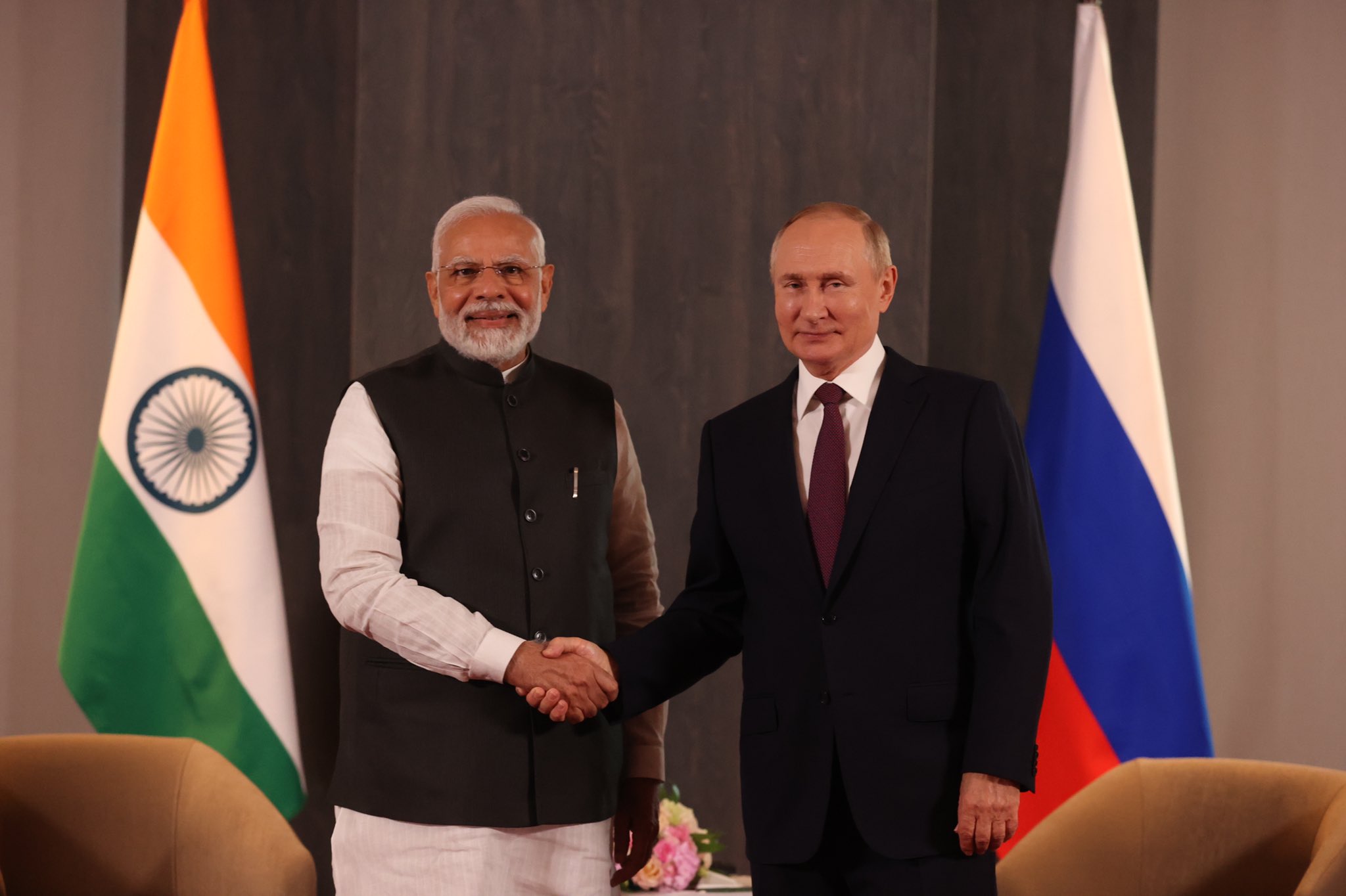
Russia-India economic cooperation** is a topic of significant global interest, particularly in light of recent geopolitical shifts. At a recent high-profile gathering, President Vladimir Putin addressed the deepening economic ties between Russia and India. While his remarks shed light on the burgeoning trade relationship, a specific claim about a potential $10 billion loss to India if it ceased Russian oil imports appears to lack direct substantiation in readily available reports of his speech. This article delves into Putin’s actual statements, the nuances of the Russia-India economic cooperation, and the broader context of this evolving partnership, separating verified information from unconfirmed assertions.
Putin’s Valdai Club Address: Highlighting Trade Potential
During the Valdai Discussion Club plenary session in Sochi, President Vladimir Putin extensively discussed Russia-India economic cooperation. He emphasized the strong bond between the two nations, particularly focusing on their economic relationship. A key highlight of his speech, as reported by TASS on October 3, 2024, was the current trade turnover. Putin noted that the trade between Russia and India stands at approximately $63 billion. While this figure represents a significant economic exchange, Putin suggested it pales in comparison to the true potential of their partnership.
To underscore his point, Putin drew a stark comparison. He highlighted that Russia’s trade with Belarus, a nation with a population of just 10 million, totals around $50 billion. When contrasted with India’s massive population of 1.5 billion people, the $63 billion trade volume with India clearly indicates, in Putin’s view, an enormous untapped opportunity. “It obviously does not correspond to our potential opportunities,” Putin stated, signaling a clear ambition for greater economic engagement. He stressed the imperative to “solve the whole range of tasks to unlock our opportunities and potential advantages,” indicating a proactive approach from Russia to bolster its economic ties with India. This perspective from Putin underscores the strategic importance both nations place on expanding their shared economic footprint, far beyond present levels.
The Unsubstantiated $10 Billion Claim
Despite the detailed discussions on Russia-India economic cooperation at the Valdai Club, a specific claim circulating in some analyses—that India would face a $10 billion loss if it halted oil imports from Russia—was not evident in the available reports of President Putin’s speech. While energy cooperation is undoubtedly a cornerstone of their bilateral relations, particularly as Russia became a leading supplier of discounted oil to India following Western sanctions, the public transcripts and summaries of Putin’s remarks do not contain any reference to:
- A precise $10 billion loss figure.
- Direct commentary on the consequences if India were to cease oil imports from Russia.
- Any quantified economic impact linked to hypothetical changes in oil trade.
Instead, the focus of Putin’s public statements centered on his broader assessment that the current trade volumes, despite reaching $63 billion, do not adequately reflect the immense potential for Russia-India economic cooperation given India’s massive demographic and economic scale. The discrepancy suggests that the $10 billion figure might have originated from other contexts, perhaps from economic analyses or discussions external to Putin’s direct address. Attributing this specific financial consequence directly to Putin’s Valdai speech would, therefore, be inaccurate without further corroborating evidence. Responsible reporting focuses on what was actually said, which in this instance, revolved around the general growth in trade and the aspiration for even greater collaboration.
Russia and India: A Growing Economic Partnership
The story of Russia-India economic cooperation has taken a fascinating turn in recent years, particularly since 2022. Prior to the geopolitical shifts triggered by Russia’s invasion of Ukraine and subsequent Western sanctions, Russia accounted for less than 2% of India’s oil imports. However, this dynamic dramatically changed as India strategically capitalized on discounted crude oil prices offered by Russia. By 2023, Russia had surged to become India’s top oil supplier, providing approximately 35% of its crude oil needs. This shift not only underscores India’s pragmatic energy policy but also highlights how resilient the Russia-India economic cooperation has become amidst global pressures.
This bolstered energy relationship, while significant, is part of a much wider tapestry of economic interaction. Both nations are actively working to diversify their collaboration beyond just oil and gas. They are exploring and expanding cooperation across multiple vital sectors, including defense, advanced technology, and finance. The objective is clear: to build a more robust, multifaceted economic relationship that isn’t overly reliant on a single commodity. The $63 billion trade figure cited by Putin, a substantial increase from previous years, reflects this growth. Yet, his remarks also suggest that even this impressive figure represents only a fraction of what is truly possible, given the sheer scale of India’s economy and its burgeoning population. This shared ambition to unlock “huge potential of economic cooperation” continues to drive their strategic partnership forward.
A Deeper Look at Energy Ties and Global Shifts
The strengthening energy ties between Russia and India serve as a crucial backdrop to President Putin’s remarks on Russia-India economic cooperation. This relationship intensified dramatically after February 2022, when Western sanctions against Russia led to a significant realignment of global energy markets. India, a rapidly growing economy with immense energy demands, found a reliable supplier in Russia, which was offering crude oil at attractive, discounted rates. This mutually beneficial arrangement allowed India to secure its energy needs while providing Russia with a vital market for its oil exports. The shift reshaped global oil flows, demonstrating the fluidity of international trade in response to geopolitical events.
This strategic energy partnership is not merely a transactional one; it reflects a broader alignment of interests. For India, access to affordable energy is paramount for its economic development and industrial growth. For Russia, maintaining key trade relationships, particularly with large, non-Western economies, is essential for its economic stability. This has made energy cooperation a frequent and prominent topic in bilateral economic discussions. While the specific $10 billion claim regarding potential losses remains unsubstantiated in Putin’s direct statements, the context of these robust energy ties explains why such economic impacts are often discussed by analysts in relation to Russia-India economic cooperation. This ongoing dialogue emphasizes the critical role energy plays in defining the depth and direction of their economic bond.
Beyond Oil: Diversifying Economic Bonds
While energy has undeniably played a central role in recent Russia-India economic cooperation, both nations are keenly focused on diversifying their economic portfolio. The strategy is to build a comprehensive partnership that extends far beyond the crude oil trade. This involves actively expanding collaboration into numerous other high-potential sectors. For instance, defense cooperation has historically been a strong pillar, with India being a major purchaser of Russian military equipment and technology. This relationship is evolving to include joint production and technological transfers, aiming for greater self-reliance for India.
Furthermore, there is a concerted effort to deepen ties in technology, with discussions around areas like space exploration, nuclear energy, and digital solutions. Financial cooperation is also gaining momentum, as both countries explore alternative payment mechanisms to bypass Western-dominated systems, thereby facilitating smoother trade and investment. These efforts are geared towards creating a resilient and future-proof Russia-India economic cooperation. The goal is to ensure that their economic relationship is not solely dependent on fluctuating energy prices or geopolitical pressures, but rather on a broad base of mutual interests and shared strategic objectives. By focusing on diversification, Russia and India are laying the groundwork for a more stable and sustainable long-term economic partnership.
Global Implications of a Resilient Partnership
The evolving Russia-India economic cooperation carries significant global implications, offering a compelling case study of how non-Western economies are adapting to a new geopolitical landscape. This growing trade relationship serves as a prime example of how certain nations within the Global South have managed to maintain and even deepen economic relations with Russia, despite considerable pressure from Western powers. This demonstrates a growing multipolarity in the global economic order, where traditional alliances are being challenged and new trade patterns are emerging.
The sustained and increasing trade between Russia and India, especially in critical sectors like energy, has far-reaching effects. It directly impacts global energy markets, as new supply chains and demand patterns become established, potentially influencing pricing and market stability. Beyond energy, the broader economic alignment between these two major powers could also lead to new international economic architectures, including alternative financial systems and trading blocs. This shift is not merely about bilateral trade; it represents a significant re-calibration of international economic alignments, with potential lasting impacts on global governance and the balance of power. The resilience of Russia-India economic cooperation underscores the dynamic nature of international relations and the increasing autonomy of emerging economies in shaping their own destinies. For more insights into Russia’s economic policies, you can visit TASS: https://tass.com/economy/2024755.
Conclusion
President Putin’s remarks at the Valdai Club provided valuable insight into Russia’s perspective on Russia-India economic cooperation. While he clearly articulated an ambition to unlock the vast, untapped potential of their $63 billion trade relationship, it’s crucial to distinguish between confirmed statements and unsubstantiated claims. The notion of a $10 billion loss to India if it ceased Russian oil imports, though widely discussed, was not present in available reports of Putin’s speech.
The actual narrative reveals a dynamic and increasingly diversified economic partnership, driven by strategic interests and a shared vision for greater collaboration across sectors like energy, defense, and technology. This evolving relationship not only serves the mutual benefits of Russia and India but also significantly influences global energy markets and international economic alignments, underscoring the growing importance of Global South nations in shaping the future world order. The continued growth in Russia-India economic cooperation highlights a powerful trend towards a more multipolar global economy.
Sources : https://tass.com/economy/2024755