
Protests Against Trump ICE: How a Nation’s Fury Ignites an America-On-Boil ICE Revolt
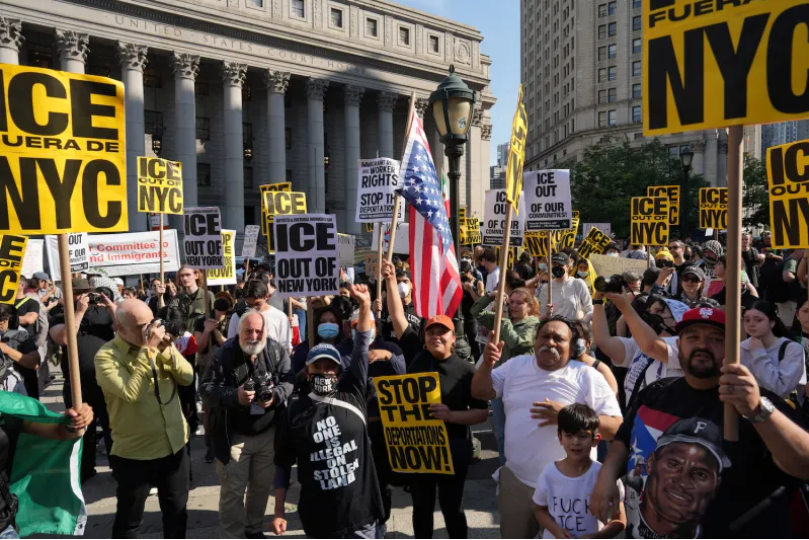
The United States is witnessing a surge of protests against Trump ICE, marking a critical moment in American history. These demonstrations have quickly escalated into an America On Boil Trump ICE revolt, with widespread unrest gripping dozens of cities following the tragic killing of Renee Good. This article will explore the deeper currents of protests against Trump administration ICE policies that have been building since the 2024 election. We will map the extensive Trump ICE protests nationwide and critically examine the heated “ICE controversy America On Boil.”
On January 7, 2026, Renee Nicole Good, a 37-year-old U.S. citizen, was fatally shot by an ICE agent in Minneapolis, Minnesota. This incident occurred amidst what the Department of Homeland Security (DHS) described as the largest immigration enforcement operation ever, with 2,000 agents deployed to the Minneapolis-Saint Paul area. Good was acting as a legal observer, monitoring the actions of federal immigration agents when she was killed. This event ignited a national wave of anger and defiance.
[Source]
The Catalyst: Renee Good’s Killing and Minneapolis’s Immediate Response
The immediate spark for the nationwide outrage was the devastating death of Renee Good. Her Renee Good killing ICE protests quickly transformed into a powerful Minneapolis ICE revolt after Renee Good killing, drawing national attention to federal immigration enforcement tactics.
[Source]
Defining the Incident
Renee Nicole Good, a 37-year-old U.S. citizen, was fatally shot by an ICE agent on January 7, 2026, in Minneapolis’s Central neighborhood. The incident happened on Portland Avenue, specifically between East 33rd and 34th Streets. Four agents from two ICE vehicles approached Good’s maroon Honda Pilot, which was seen blocking a lane on the avenue. Good, a legal observer, was monitoring the extensive activities of Immigration and Customs Enforcement (ICE) in the area when this confrontation occurred.
[Source]
Conflicting Narratives Emerge
Following the shooting, the Department of Homeland Security offered a specific account of events. DHS spokesperson Tricia McLaughlin claimed that an ICE officer, “fearing for his life,” shot Good in self-defense. McLaughlin went on to label Good’s actions as “an act of domestic terrorism,” suggesting she had attempted to run over the officers. Adding to this narrative, DHS Secretary Kristi Noem stated that Good had been “stalking and impeding” ICE agents all day and “attacked them and those surrounding them and attempted to run them over.”
[Source]
However, this official version was immediately challenged by eyewitness accounts and video evidence. The Guardian and The Independent, reviewing bystander videos, reported that there was “no visible sign in the videos of ICE officers being injured.” In fact, the ICE officer involved “remained on his feet throughout the entirety of the incident.” These contradictions fueled the America On Boil Trump ICE revolt, deepening the ICE controversy America On Boil as the public questioned the federal government’s transparency and truthfulness.
[Source]
Local Leadership Reacts Strongly
The reaction from Minneapolis’s local leadership was swift and unequivocal. After personally reviewing the video footage of the incident, Mayor Jacob Frey delivered a powerful message. He publicly stated, “Having seen the video myself, I want to tell everybody directly that is bullshit,” directly refuting the DHS narrative. Mayor Frey then issued a stark directive to the federal agency: “To ICE, get the fuck out of Minneapolis.”
[Source]
Minnesota Governor Tim Walz also called for the federal government to end its presence in the city, expressing deep concerns about the aggressive tactics and the resulting death of a citizen. These strong condemnations from local elected officials highlighted the growing rift between city and state authorities and the federal immigration enforcement agencies.
[Source]
Immediate Fallout in Minneapolis
The tragic events in Minneapolis quickly led to significant disruptions and heightened tensions within the city. The Minneapolis ICE revolt after Renee Good killing created a climate of fear and anger that impacted daily life and the community’s interaction with law enforcement.
[Source]
Schools Close Amidst Fear
In response to the escalating situation, Minneapolis Public Schools made the decision to cancel classes for the remainder of the week. This closure was attributed to “incidents around the city,” which included both Good’s shooting and a concerning episode at Roosevelt High School. At the school, armed ICE officers reportedly used pepper spray and pepper balls against students. Two school staff members were also handcuffed during the operation. These actions against students and educators further inflamed community anger and solidified the local resistance to federal agents.
[Source]
Law Enforcement Response Escalates
As protests grew in size and intensity around Minneapolis, law enforcement’s response also heightened. Authorities deployed tear gas and pepper spray against demonstrators, attempting to disperse crowds that had gathered to express their outrage. In anticipation of further unrest, Governor Walz announced preparations for activating the Minnesota National Guard, signaling the severity of the situation. The Minneapolis Police Department also activated mutual aid from surrounding jurisdictions, despite acknowledging that they had “not [received] credible claims that violent unrest would occur.” This readiness for a large-scale response underscored the deep divisions and potential for conflict.
[Source]
A Community Under Strain
The atmosphere in Minneapolis during the immediate aftermath of the shooting was charged with deep emotions. Thousands of protesters converged at the shooting location on the evening of January 7, including members of the Minneapolis City Council, to show their solidarity and anger. Protesters responded to law enforcement actions by throwing snowballs, a symbolic act of defiance.
[Source]
CBS News, reporting from the scene, described a feeling of “deep sadness, also deep tension and concern about what happens next.” Reporters also noted the presence of conflicting groups at the protest site. Some individuals were observed carrying “don’t tread on me” flags. Locals suggested these individuals were “probably not from Minneapolis” and represented “outside agitators,” though those individuals claimed they were there “to protect the place.” This mix of local grief, collective action, and external influences highlighted the complex dynamics of the protests.
[Source]
[Source]
Trump ICE Protests Nationwide
The outrage over Renee Good’s killing was not confined to Minneapolis; Trump ICE protests nationwide erupted with unprecedented speed and scale, igniting a powerful and unified movement across the country.
[Source]
By the evening of January 7, thousands gathered at the shooting site in Minneapolis, including city council members. This local outpouring quickly galvanized into a national movement. Protests, demonstrations, and vigils spread rapidly, ultimately erupting in at least 25 cities across the United States. Each city’s demonstration carried its own local flavor while echoing the shared sentiments of the anti-ICE demonstrations Seattle Minneapolis motif – grief, anger, and a demand for accountability. Protesters chanted shared slogans, displayed similar signs, and expressed solidarity with Minneapolis and the memory of Renee Good.
[Source]
Here is a list of cities where significant demonstrations occurred:
- Atlanta
- Boston
- Chicago
- Colorado Springs
- Columbus
- Detroit
- Duluth
- Eugene
- Grand Rapids
- Miami
- New York City
- Oakland
- Portland (OR)
- Phoenix
- Pittsburgh
- Richmond
- Seattle
- San Antonio
- San Diego
- San Francisco
- Washington, D.C.
Seattle’s Strong Stand
Seattle quickly emerged as a major hub for resistance, showcasing powerful protests against ICE Seattle. The city saw large-scale gatherings, with thousands taking to the streets to denounce the actions of federal immigration authorities. Protest tactics included extensive marches through downtown areas, sit-ins that disrupted traffic, and a significant blockade of the local ICE office. These bold actions mirrored the spirit of the anti-ICE demonstrations Seattle Minneapolis, emphasizing local solidarity with broader national demands for justice. Activists and community leaders delivered impassioned speeches, condemning the use of lethal force and calling for an immediate end to aggressive federal enforcement policies.
[Source]
New York’s Ongoing Resistance
New York City, a long-standing epicenter of activism, joined the national chorus with its own vibrant revolt against Trump ICE New York. The city experienced significant and sustained actions, reflecting an ongoing New York ICE revolt today. Rallies were held at prominent locations such as City Hall, drawing diverse crowds united in their opposition to federal immigration enforcement. Citizens organized petitions directed at the mayor and city council, demanding local policy changes and stronger protections against ICE operations. Activists pushed for resolutions from the city council condemning federal actions and explored legal avenues to challenge the presence and tactics of federal agents within city limits. These efforts underscored New York’s commitment to protecting its residents and challenging what many perceive as overreaching federal power.
[Source]
Other Key Hubs Join the Outcry
Beyond Minneapolis, Seattle, and New York, numerous other cities contributed to the growing national outcry. In Atlanta, protests highlighted the historical context of civil rights activism, linking current immigration issues to past struggles for justice. Boston saw students and community groups staging solidarity marches, emphasizing the impact of federal policies on immigrant families and academic institutions. Chicago witnessed diverse coalitions come together, from legal aid organizations to faith-based groups, all demanding accountability and reform. These brief snapshots from cities like Atlanta, Boston, and Chicago collectively reinforce the phrase America On Boil Trump ICE revolt, capturing the collective heat and fury that swept across the nation. Each city, in its unique way, became a focal point of resistance against federal immigration enforcement, showcasing a united front against what many viewed as unjust and lethal policies.
[Source]
Understanding the “ICE Controversy America On Boil”
The profound “ICE controversy America On Boil” stems from several critical grievances that have deeply resonated with the American public, pushing the national dialogue to a boiling point.
[Source]
Core Grievances Fueling the Outrage
At the heart of the controversy is the use of lethal force against Renee Good, a U.S. citizen. Her role as a legal observer, monitoring ICE activities, directly contradicts the Department of Homeland Security’s (DHS) claim that she was engaged in “domestic terrorism.” This label itself has become a major point of contention, as many perceive it as an attempt to demonize legitimate oversight and dissent. Furthermore, the persistent lack of transparency from federal agencies, coupled with video evidence that directly contradicts official statements, has severely eroded public trust. The glaring discrepancies between DHS claims of officer injury and what bystander videos show has intensified accusations of a cover-up and deceit.
[Source]
Congressional Response Demands Accountability
The severity of the situation prompted a strong reaction from Capitol Hill. House Minority Leader Hakeem Jeffries publicly demanded a criminal investigation into Renee Good’s death, emphasizing the need for federal accountability. Senate Minority Leader Chuck Schumer, along with numerous other Democratic lawmakers, echoed these calls, pushing for thorough and impartial inquiries into the incident and the conduct of federal agents. These demands from prominent congressional figures underscore the national significance of the event and the widespread concern among elected representatives about the actions of ICE and DHS.
[Source]
Federal Government’s Stance
In the immediate aftermath, the federal government maintained its stance, though with some internal developments. President Trump reportedly watched and reacted to video footage of the shooting during an interview conducted in the Oval Office with The New York Times. His reaction, while not immediately public, indicated the incident’s high-level attention within the administration. DHS Secretary Kristi Noem continued to defend the agents’ actions, reiterating claims that Good had been “stalking and impeding” officers. This steadfast defense in the face of widespread public and political criticism further fueled the protests against Trump administration ICE, framing the controversy as a direct challenge to the policies and narrative of the executive branch.
[Source]
The Broader Political Context
Renee Good’s tragic death is also deeply embedded in a broader political context. Good herself had relocated to Canada with her wife and family following Donald Trump’s 2024 presidential election victory, later returning to Minneapolis. Her personal decision to leave and return highlights the intense politicization of immigration enforcement and the profound impact of national elections on individual lives and choices. This background underscores how federal immigration policies, particularly those enacted under the Trump administration, are not merely administrative but carry significant political weight, shaping communities and driving fierce public debate. The incident thus became a flashpoint for long-simmering debates about the scope and nature of immigration enforcement in America.
[Source]
Patterns of Escalation and Credibility Gap
The events surrounding Renee Good’s killing reveal a disturbing pattern of escalation in federal immigration enforcement and a significant credibility gap that has damaged public trust. The incident, and the resulting America On Boil Trump ICE revolt, highlights a critical turning point in how federal agents operate and how their actions are perceived.
[Source]
A Dangerous Escalation
Historically, federal immigration checks, while often controversial, rarely involved lethal force against a U.S. citizen acting in a public observer role. Renee Good’s shooting marks a stark and alarming shift – a “pattern of escalation” from routine immigration enforcement activities to a fatal shooting. This dramatic increase in intensity has provoked outrage and fear, leading many to question the training, protocols, and oversight of federal agents. The fact that a legal observer, intended to ensure transparency and accountability, became the victim of such an encounter underscores the perceived dangers of intensified federal presence and tactics in communities. It directly fuels the America On Boil Trump ICE revolt, demonstrating a perceived readiness by authorities to use extreme measures.
[Source]
The Credibility Gap Widens
A central and deeply troubling aspect of this controversy is the substantial “credibility gap” between official Department of Homeland Security (DHS) statements and the available video evidence. DHS claims that an officer feared for his life and that Renee Good attempted to run them over. However, bystander videos reviewed by news outlets like The Guardian and The Independent clearly show no visible signs of injury to the officers and that the involved officer remained on his feet throughout the incident.
[Source]
This direct contradiction has led local officials, including Minneapolis Mayor Jacob Frey, to publicly label the DHS narrative as “bullshit.” Such strong language from local leaders underscores the profound erosion of trust in federal authorities. When official government accounts are so easily disproven by widely available evidence, it creates a crisis of confidence. This gap makes it incredibly difficult for the public to believe future statements from federal agencies, fostering deeper skepticism and further entrenching the national outrage.
[Source]
The Critical Role of Legal Observers
Renee Good was acting as a legal observer, a civilian role intended to monitor law enforcement activities and protect civil liberties. Her death, while engaged in this vital work, has had a chilling effect and profoundly impacted community trust. Legal observers play a crucial role in documenting incidents, providing transparency, and ensuring accountability during potentially volatile interactions between the public and authorities. When an observer is killed, it sends a powerful message that even those attempting to uphold rights are at risk. This tragic event has solidified the perception among many communities that federal immigration enforcement, particularly under the current administration, operates with a lack of transparency and a disregard for fundamental safeguards, making the work of legal observers even more critical but also more perilous.
Conclusion
The protests against Trump ICE have become a defining moment in 2026 America, reflecting a nation grappling with the fundamental questions of civil liberties, government accountability, and the boundaries of federal power. The widespread America On Boil Trump ICE revolt serves as a stark reflection of a nationwide demand for policy overhaul and justice. The killing of Renee Good ignited a powerful firestorm, exposing deep rifts between federal agencies, local communities, and elected officials.
[Source]
As this critical situation unfolds, we encourage readers to follow the ongoing Trump ICE protests nationwide, which continue to demonstrate the collective will for change. Supporting legal observer networks is more important than ever, as they play a crucial role in documenting events and upholding transparency. Monitoring legislative developments at both federal and local levels will be key to understanding how these protests translate into concrete policy changes. The ICE controversy America On Boil represents a pivotal moment, with the potential to either force significant reforms in immigration enforcement or lead to further unrest if demands for accountability are ignored. The future of immigration policy and civil rights in America hangs in the balance.
[Source]
Frequently Asked Questions
What sparked the protests against Trump ICE?
The primary spark was the fatal shooting of Renee Good, a U.S. citizen and legal observer, by an ICE agent in Minneapolis on January 7, 2026.
What was the official explanation for Renee Good’s death?
The Department of Homeland Security claimed an ICE officer feared for his life and shot Good in self-defense, labeling her actions as “domestic terrorism” and alleging she attempted to run over officers.
What evidence contradicted the official narrative?
Eyewitness accounts and bystander videos reviewed by major news outlets showed no visible signs of injury to the officers and indicated the involved officer remained on his feet throughout the incident, directly contradicting the DHS claims.
How did local leaders in Minneapolis react?
Minneapolis Mayor Jacob Frey publicly called the DHS narrative “bullshit” and demanded that ICE “get the fuck out of Minneapolis.” Minnesota Governor Tim Walz also called for the federal government to end its presence in the city.
What was the immediate impact in Minneapolis?
Schools were closed due to escalating incidents, law enforcement response intensified with tear gas and pepper spray, and thousands of protesters gathered at the shooting site, creating a tense atmosphere.
Were these protests limited to Minneapolis?
No, the outrage quickly spread, leading to significant Trump ICE protests nationwide in at least 25 cities across the United States, including Seattle, New York City, Atlanta, and Boston.
What are the core grievances fueling the “ICE controversy America On Boil”?
Core grievances include the use of lethal force, the DHS’s labeling of Good’s actions as “domestic terrorism,” a lack of transparency from federal agencies, and contradictions between official statements and video evidence, all contributing to a severe erosion of public trust.