
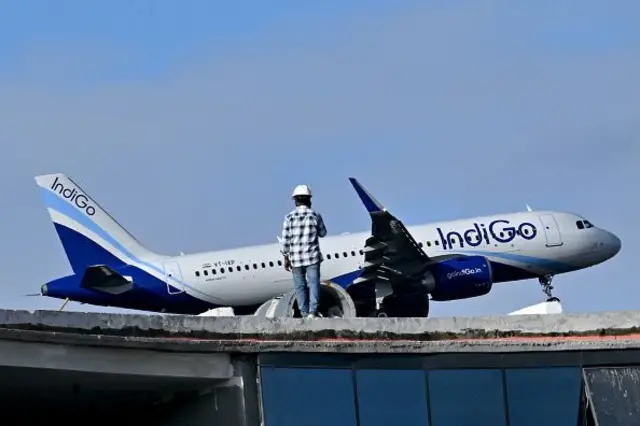
IndiGo flight delays reasons India: Unpacking the Operational Chaos and Its Ripple Effect
Estimated reading time: 12 minutes
Key Takeaways
- The IndiGo crisis in December 2025 saw a dramatic drop in on-time performance, affecting over 260,000 passengers.
- Major causes included pilot and cabin crew shortages exacerbated by new Flight-Duty-Time-Limitation (FDTL) rules.
- IndiGo’s rapid expansion was not matched by sufficient investment in its supporting infrastructure and staff.
- Internal mismanagement, including poor strategic planning and inter-departmental coordination failures, worsened the situation.
- The crisis had significant economic repercussions and damaged passenger trust, leading to government intervention.
Table of contents
- IndiGo flight delays reasons India: Unpacking the Operational Chaos and Its Ripple Effect
- Key Takeaways
- 1. Introduction – Why the Fuss?
- 2. Understanding the Scale – Why are IndiGo flights delayed so much?
- 3. Deep Dive into IndiGo Operational Issues Causing Cancellations
- 4. Unpacking IndiGo’s Internal Problems & Mismanagement
- 5. The Broader Impact of IndiGo’s Internal Problems on Air Travel in India
- 6. Moving Forward – Strategies for Restoring Reliability
- 7. Conclusion – Charting a Course for Smoother Skies
- 8. FAQ
1. Introduction – Why the Fuss?
If you’ve flown with IndiGo in India recently, especially towards the end of 2025, you might have felt a deep frustration. Across the nation, many travelers experienced chaos and confusion due to frequent flight problems. People were left wondering: **why are IndiGo flights delayed so much?** This wasn’t just a few minor hiccups; December 2025 saw a huge number of cancellations and delays. These problems affected more than 260,000 passengers, making it a very big deal for air travel in India.
This blog post will go beyond simply complaining about the problems. We will dig deep to understand the real **IndiGo flight delays reasons India**. We’ll look at the main causes, the tough challenges IndiGo faced in its daily operations, and some of the ways the airline managed things internally that made the situation worse.
To give you an idea of how big this crisis was, consider this: IndiGo’s ability to fly on time dropped dramatically. In October, about 84 out of every 100 IndiGo flights left on schedule. But by December 4, 2025, this number had fallen to just 8.5 out of 100 flights. That’s a huge drop, showing how bad the problem became very quickly. https://en.wikipedia.org/wiki/2025_IndiGo_disruption. This massive fall in performance shows that something serious went wrong, affecting a great many people trying to travel.
2. Understanding the Scale – Why are IndiGo flights delayed so much?
The problems IndiGo faced were not small. They grew very quickly, causing a widespread crisis that impacted air travel across India. Many passengers found themselves stuck, asking, **why are IndiGo flights delayed so much?** The sheer volume of flight cancellations and disruptions highlights the deep issues at play and gives us clearer **IndiGo flight delays reasons India**.
Let’s look at the numbers to truly understand the scale of this problem:
Massive Cancellation Spikes:
- On December 5, 2025, about 1,600 IndiGo flights were cancelled. This was a shocking number, impacting thousands of passengers.
- The next day, December 6, saw around 800 more cancellations.
- Even by December 7 and 8, the airline was still cancelling about 650 flights each day. https://en.wikipedia.org/wiki/2025_IndiGo_disruption. These continuous cancellations created a ripple effect, making travel planning nearly impossible for many.
Total Flights Cancelled by December 9, 2025:
- By this date, a total of 422 flights were still being cancelled.
- Major cities were hit hard: Delhi alone saw 152 cancellations, and Bengaluru had 121. This shows how crucial travel hubs experienced significant disruption. https://www.indiatoday.in/india/story/indigo-flight-cancellation-status-live-updates-check-dgca-delhi-mumbai-bengaluru-ahmedabad-kolkata-airport-news-2833007-2025-12-09.
Passenger Impact:
- More than 266,000 travelers were affected by these delays and cancellations. Imagine how many plans were ruined, how many important meetings were missed, and how much stress this caused.
- Specifically, 40,789 flights were cancelled. This number shows the direct impact on individual journeys and schedules. https://www.indiatoday.in/india/story/indigo-flight-cancellation-status-live-updates-check-dgca-delhi-mumbai-bengaluru-ahmedabad-kolkata-airport-news-2833007-2025-12-09.
These figures illustrate a crisis that went far beyond typical airline delays. It was a systemic breakdown that affected countless individuals and India’s air travel infrastructure. The widespread nature of these airline disruptions across major Indian cities like Delhi, Mumbai, and Bengaluru demonstrates that the airline’s system was stretched too thin, leaving no room for unexpected issues. Passengers in these busy metropolitan areas bore the brunt of the `operational chaos`, experiencing long waits and uncertain travel plans.
3. Deep Dive into IndiGo Operational Issues Causing Cancellations
The widespread flight disruptions at IndiGo weren’t just bad luck. They stemmed from several core challenges within the airline’s daily workings. Understanding these **IndiGo operational issues causing cancellations** is key to grasping the full picture of the crisis. These are the main reasons why so many flights faced problems, highlighting areas where the airline’s operations struggled.
3.1 Crew Shortages & New Flight-Duty-Time-Limitation (FDTL) Rules
One of the biggest factors behind the chaos was a shortage of pilots and cabin crew, made much worse by new rules. These rules are called Flight-Duty-Time-Limitation (FDTL) rules. They are strict guidelines set by the government that say how long pilots and cabin crew can fly and how much rest they must get. These limits were put in place to stop fatigue, which means pilots getting too tired to fly safely. A key change was reducing night landings for pilots from six per week to just two. https://en.wikipedia.org/wiki/2025_IndiGo_disruption.
The story of these rules goes like this: they were announced in 2024 but their full start was delayed. They finally came into full effect on November 1, 2025. This meant airlines had to make sure their pilot schedules perfectly matched these new, tougher rest rules. https://en.wikipedia.org/wiki/2025_IndiGo_disruption.
The impact on IndiGo was immediate and severe. In November 2025 alone, IndiGo had 1,232 cancellations. A shocking 755 of these – roughly 61% – were directly because of problems with crew availability or the new FDTL rules. This shows just how much the airline struggled to staff its flights under the new regulations. https://en.wikipedia.org/wiki/2025_IndiGo_disruption.
The Federation of Indian Pilots, a group representing pilots, pointed out a major reason for this crisis. They said it was due to “years of lean manpower planning” by IndiGo. This means IndiGo had been running with too few staff for a long time and didn’t hire enough pilots soon enough. They mentioned that training a new pilot takes a very long time, usually 12 to 18 months, to get them ready to fly commercial planes. Because of this long lead-time, IndiGo couldn’t quickly hire and train enough new pilots to cover the hours lost due to the new FDTL rules. This lack of a `reserve crew pool` meant that when the rules changed, they had no spare pilots to step in, leading to significant **airline disruptions** and causing people to ask, **why are IndiGo flights delayed so much?** This critical shortage was a major **IndiGo operational issue causing cancellations**.
3.2 Aircraft Maintenance & Technical Snags
Beyond crew issues, technical problems with IndiGo’s aircraft also played a role in the delays and cancellations. IndiGo itself mentioned an issue with an A320 software patch. This software problem affected the airline’s ability to schedule flights smoothly. https://en.wikipedia.org/wiki/2025_IndiGo_disruption.
Aircraft maintenance is very important. Planes need regular checks and repairs to stay safe and flying. These checks often mean taking an aircraft out of service for a certain amount of time, known as a `maintenance window`. If there aren’t enough spare parts readily available, or if these maintenance checks take longer than planned, it can cause problems. A single delayed maintenance can lead to a plane being unavailable when it’s supposed to fly. This then causes what are called `ground-delay-at-gate` (GDAT) events, where planes are stuck at the airport for longer than they should be, unable to take off. These technical snags are important **IndiGo operational issues causing cancellations** because they directly reduce the number of planes available for service.
3.3 Ground-Handling & Airport Logistics
Even when planes are ready and crew are available, issues on the ground can still cause problems. **IndiGo operational issues causing cancellations** also included challenges with ground handling and airport logistics. Airports in big cities like Delhi, Mumbai, and Bengaluru are incredibly busy. This often leads to `airport congestion`, where there are simply too many planes trying to use the runways and gates at the same time. This creates `turnaround-time bottlenecks`. A turnaround time is how quickly an aircraft can land, unload passengers, get cleaned, refueled, boarded, and then take off again. If this process is slow, it causes delays. https://en.wikipedia.org/wiki/2025_IndiGo_disruption.
Inefficient baggage handling, where bags take too long to get from the plane to the carousel or from check-in to the plane, can also add to delays. Similarly, if there’s poor coordination in `crew-turn-around` – getting flight crew off one plane and onto their next one quickly – it further amplifies delays. When an airline already has scarce crew due to FDTL rules, any extra minute wasted on the ground due to these logistical issues becomes very costly, leading to more flight problems. These problems on the ground are critical **IndiGo operational issues causing cancellations**.
3.4 Air-Traffic-Control (ATC) Congestion & Weather (External Factors)
While many of IndiGo’s problems came from inside the airline, some external factors also played a role in why are IndiGo flights delayed so much. Air-Traffic-Control (ATC) manages all planes in the sky and on the ground at an airport. When too many planes are trying to fly in the same area or land at the same airport, it causes `ATC congestion`. This can force flights to wait or take longer routes.
In November 2025, 258 of IndiGo’s cancellations were linked to restrictions in airspace or at airports. Another 92 cancellations were due to failures in the ATC system itself. https://en.wikipedia.org/wiki/2025_IndiGo_disruption. Weather, such as fog, heavy rain, or storms, can also significantly disrupt flights, forcing delays or cancellations for safety reasons. While these external factors, like bad weather or busy airspace, affect all airlines, IndiGo’s specific problem was that it had very `thin operational buffers`. This means the airline had very little spare capacity in terms of planes or crew. So, when external problems happened, IndiGo was hit much harder than other airlines. Its lack of `network stability` meant that any external pressure caused a disproportionately severe impact on its schedule and passengers.
4. Unpacking IndiGo’s Internal Problems & Mismanagement
Beyond the daily operational struggles, a deeper look reveals that many of IndiGo’s challenges stemmed from its own choices and planning over time. These fundamental issues highlight **IndiGo’s mismanagement leading to flight disruptions**. It was not just about day-to-day problems but also about how the airline was run and its plans for the future.
4.1 Rapid Expansion vs. Supporting Infrastructure
IndiGo has grown very quickly to become the biggest airline in India. Its main goal was to grab a large share of the market by offering low prices and flying many routes. To do this, it followed a “lean staffing” model. This means running with just enough staff and resources to keep costs down. While this strategy helped IndiGo grow fast, it came with a big risk.
The airline’s rapid expansion of new flights and routes didn’t match the growth in its supporting systems. IndiGo didn’t hire enough pilots, cabin crew, ground staff, or invest enough in new technology and training at the same speed. This left the airline with no `slack` – no extra resources – to handle unexpected problems, like the new FDTL rules. When a `regulatory shock` came, like the new crew rules, IndiGo’s infrastructure couldn’t cope. This imbalance between growth and support infrastructure is a clear sign of **IndiGo’s mismanagement leading to flight disruptions** and had a significant **impact of IndiGo’s internal problems on air travel**.
4.2 Strategic Planning & Resource Allocation Gaps
A key part of **IndiGo’s mismanagement leading to flight disruptions** was a failure in strategic planning, especially concerning the new FDTL rules. The rules were announced in June 2024, giving airlines plenty of warning. While their full implementation was delayed, IndiGo still had a window of opportunity to prepare. The airline handled Phase 1 of the FDTL rules, which started in July 2025, without major issues. This suggests they understood the new rules.
However, IndiGo failed to properly plan for the full impact of Phase 2, which came into effect in November 2025. They didn’t seem to anticipate how much more crew they would need to meet the stricter rest requirements. This points to a lack of `scenario-planning tools` – the ability to imagine different future situations and plan for them. It also shows a lack of `contingency buffers`, which are extra resources kept aside for emergencies. This failure in foresight and planning meant IndiGo was caught off guard, highlighting the **impact of IndiGo’s internal problems on air travel**.
4.3 Inter-Departmental Coordination Failures
A large airline like IndiGo needs many different teams to work together perfectly, like a well-oiled machine. These teams include operations (who manage daily flights), crew-scheduling (who make sure pilots and cabin crew are in the right place at the right time), and maintenance (who keep planes in top condition). When these teams don’t communicate well or work together smoothly, problems can quickly `cascade`.
In IndiGo’s case, poor communication meant that when crew limits were hit due to the new FDTL rules, the news didn’t get quickly and clearly to all relevant departments. This caused `cascading cancellations`: one flight cancellation would lead to a pilot or plane being out of position, which would then cause another flight to be cancelled, and so on. This breakdown in teamwork is a serious **impact of IndiGo’s internal problems on air travel**, turning small issues into a widespread `operational chaos`.
4.4 Employee Morale & Workload Pressure
When an airline runs on a lean staffing model and faces major operational challenges, it puts immense pressure on its employees. Pilots, cabin crew, and ground staff often find themselves `over-worked`. They might have to fly more hours (within limits), deal with angry passengers, or work longer shifts. This constant pressure can lead to `fatigue` – where employees are simply too tired.
Fatigue not only affects safety but also makes it harder to be efficient and reliable. When employees are tired and stressed, it further compounds `schedule reliability issues`. This means that even if a flight *could* depart, a fatigued crew might not be legally able to fly it. This cycle of overwork and fatigue is another reason **why are IndiGo flights delayed so much**, adding to the **IndiGo operational issues causing cancellations** from a human resources perspective.
5. The Broader Impact of IndiGo’s Internal Problems on Air Travel in India
The issues at IndiGo didn’t just affect the airline itself; they had a wide-reaching **impact of IndiGo’s internal problems on air travel** across India. The crisis touched many lives and aspects of the economy, demonstrating how interconnected the aviation sector is.
5.1 Passenger Experience & Trust
The most immediate and painful `impact of IndiGo’s internal problems on air travel` was felt by passengers. Thousands of travelers experienced severe disruption to their plans. This led to:
- Financial losses for travelers: Many people missed connecting flights, had to pay for extra hotel stays, or even lost money on non-refundable bookings. This added unexpected costs to their journeys.
- IndiGo’s refund commitment: IndiGo did commit to providing full refunds for flights cancelled between December 5 and 15. The Directorate General of Civil Aviation (DGCA), India’s aviation watchdog, even set a strict deadline for IndiGo to complete these refunds by December 7, showing the seriousness of the situation. https://en.wikipedia.org/wiki/2025_IndiGo_disruption.
- Loss of trust: Beyond money, passengers lost faith in the airline’s ability to deliver reliable service. This damage to `passenger trust` can be difficult to rebuild and affects IndiGo’s long-term reputation.
5.2 Economic Ramifications
The `IndiGo operational issues causing cancellations` had a ripple effect on the broader economy:
- Effect on business travel: Business travelers rely on punctual flights to attend meetings, close deals, and manage operations. Delays and cancellations meant lost business opportunities and reduced productivity for companies across India.
- Tourism revenue: India’s tourism sector also suffered. Travelers, both domestic and international, might have reconsidered travel plans or shortened trips due to the uncertainty, leading to a dip in tourism revenue.
- Overall productivity: When people can’t travel efficiently, it slows down various economic activities, from manufacturing to services.
- Price caps: The government had to step in on December 6 to impose `price caps` on airfares. This was done to stop other airlines from drastically increasing prices and taking advantage of the reduced flight capacity caused by IndiGo’s problems. https://en.wikipedia.org/wiki/2025_IndiGo_disruption. This shows how one airline’s issues can distort the entire market.
5.3 Competitive Landscape & Industry Standards
The crisis also changed the playing field for other airlines and raised questions about industry practices:
- Rival airlines captured demand: As IndiGo struggled, other airlines benefited. They saw an increase in demand from stranded passengers, often leading to higher fares on their flights. This shifted market share, at least temporarily.
- Regulatory scrutiny: The events sparked potential `regulatory scrutiny` on how low-cost carriers, like IndiGo, manage their staffing and operational models. Authorities might examine if these airlines are cutting costs too much, putting reliability at risk. This could lead to new rules or stricter enforcement of existing ones to ensure all airlines maintain certain standards. The crisis raised questions about **IndiGo’s mismanagement leading to flight disruptions** and whether such practices are sustainable or safe.
5.4 Regulatory Oversight & Government Action
The Indian government and its aviation regulator, the DGCA, took direct action to address the crisis, showing the serious `impact of IndiGo’s internal problems on air travel`:
- DGCA’s order for refunds: As mentioned, the DGCA ordered IndiGo to process all passenger refunds promptly, highlighting passenger protection as a top priority.
- Price-cap imposition: The government imposed price caps to control surging fares, demonstrating its role in protecting consumers during market disruptions.
- Temporary reduction in operations: Critically, the DGCA ordered a temporary 10% reduction in IndiGo’s scheduled operations. This was a significant step taken to help the airline stabilize its network and prevent further `operational chaos`. https://www.indiatoday.in/india/story/indigo-flight-cancellation-status-live-updates-check-dgca-delhi-mumbai-bengaluru-ahmedabad-kolkata-airport-news-2833007-2025-12-09. This move underscored the gravity of the situation and the necessity for governmental intervention to restore `network stability` and control the **IndiGo operational issues causing cancellations**.
6. Moving Forward – Strategies for Restoring Reliability
To prevent future crises like the one in December 2025 and rebuild trust, IndiGo needs to make big changes. The airline must learn from the **IndiGo flight delays reasons India** and address the `IndiGo operational issues causing cancellations` and `IndiGo’s mismanagement leading to flight disruptions`. Here are some key strategies for IndiGo to ensure smoother skies:
- Workforce Planning & Recruitment:
- Launch a multi-year pilot-hiring program: IndiGo needs to plan far ahead. They should start a long-term plan to hire many new captains and first officers every year. This will create a steady supply of qualified pilots.
- Build a “reserve crew pool”: Airlines need extra pilots and cabin crew who aren’t on active flight schedules but are ready to step in. This “reserve pool” can help absorb problems caused by new rules, sick leave, or busy travel seasons. It acts as a crucial buffer against `crew shortages`.
- Enhanced Training & Retention:
- Invest in simulator hours: Pilots need regular training in flight simulators. IndiGo should provide more of these hours to keep pilots skilled and ready.
- Create clear career-progression pathways: Offering pilots and crew clear steps for advancing their careers within IndiGo can help reduce `turnover` (people leaving the company). If employees see a future, they are more likely to stay.
- Advanced Scheduling & Scenario Modelling:
- Deploy AI-driven rostering tools: IndiGo should use smart computer programs, possibly powered by Artificial Intelligence (AI), to create pilot and crew schedules. These tools can automatically make sure all FDTL limits are respected while also using planes and crew as efficiently as possible. This would prevent the kind of `scheduling gridlock` seen in the crisis.
- Improved `scenario modelling`: The airline needs tools to predict what might happen if certain rules change or if there’s bad weather. This helps them plan for different situations and avoid being caught by surprise.
- Technology Refresh:
- Resolve the A320 software patch issue: IndiGo must fix any lingering software problems that affect its aircraft.
- Upgrade flight-operations software: The software that manages flights, crew, and aircraft needs to be modern and efficient. Better software can improve real-time matching of available crew to available aircraft, making operations smoother and reducing **IndiGo operational issues causing cancellations**.
- Operational Flexibility:
- Adopt modular turn-around procedures: This means breaking down the process of preparing a plane between flights into smaller, quicker steps. Using “quick-turn” checklists, for example, can shave valuable minutes off the time a plane spends on the ground. Every minute saved helps the entire schedule stay on track.
- Cross-Functional Communication Hub:
- Create a central command centre: IndiGo should set up a special control room where representatives from operations, maintenance, crew-scheduling, and ground-handling teams work together. This hub would allow them to make `real-time decisions` and communicate instantly when problems arise, preventing `inter-departmental coordination failures`.
- Culture Shift Toward Resilience:
- Balance cost-efficiency with reliability: While being cost-effective is important for a low-cost carrier, IndiGo needs to equally focus on being reliable. They should set targets for `on-time performance` (e.g., aiming for more than 85% of flights on time) and reward teams for meeting these goals. This means valuing `operational resilience` as much as cost savings.
What-If Scenario: Imagine if IndiGo had listened to warnings and built a 10% `crew buffer` – meaning 10% more pilots and crew than absolutely needed for its schedule. With this small cushion, experts believe the December crisis could have been significantly reduced, potentially leading to fewer than 200 cancellations instead of thousands. This shows how a small investment in spare resources can prevent a huge crisis and mitigate the `impact of IndiGo’s internal problems on air travel`.
7. Conclusion – Charting a Course for Smoother Skies
The December 2025 disruptions deeply affected IndiGo and countless passengers across India. We’ve explored the core **IndiGo flight delays reasons India**, identifying a combination of factors that led to such widespread `operational chaos`. The crisis was primarily driven by the challenge of adapting to new Flight Duty Time Limitation (FDTL) rules and severe `crew shortages`. These issues were made much worse by years of `lean staffing` – running the airline with too few people – and aggressive expansion that wasn’t matched by enough investment in its infrastructure and workforce. These are clear signs of **IndiGo’s mismanagement leading to flight disruptions**.
The wide-reaching `impact of IndiGo’s internal problems on air travel` was profound. Passengers faced financial losses and a damaged trust in the airline. The economy suffered from disruptions to business and tourism. Even the government had to step in, imposing price caps and reducing IndiGo’s flight schedule to help stabilize the situation. This shows how critical `network stability` is for the country’s aviation sector.
Looking ahead, IndiGo has a clear path to rebuild. By focusing on smart workforce planning, investing in pilot training, upgrading technology, and improving how its teams work together, the airline can become reliable once more. It needs a big shift in its culture, moving towards valuing `reliability KPIs` as much as cost efficiency. Only by addressing the systemic flaws highlighted above can IndiGo rebuild trust and ensure that the **IndiGo flight delays reasons India** become a thing of the past. This will pave the way for a more stable and trustworthy flying experience for everyone.
8. FAQ
Q1: What were the main reasons for IndiGo flight delays in December 2025?
A1: The primary reasons were significant crew shortages, particularly pilots, due to the implementation of new, stricter Flight Duty Time Limitation (FDTL) rules. IndiGo’s lean staffing model and rapid expansion without adequate supporting infrastructure exacerbated these issues.
Q2: How many passengers were affected by the IndiGo disruptions?
A2: Over 260,000 passengers were affected by the delays and cancellations in December 2025.
Q3: Did IndiGo face any government intervention?
A3: Yes, the Directorate General of Civil Aviation (DGCA) ordered IndiGo to process refunds promptly and also mandated a temporary 10% reduction in IndiGo’s scheduled operations to help stabilize the situation. The government also imposed price caps on airfares.
Q4: What is IndiGo’s strategy for preventing future delays?
A4: IndiGo plans to implement strategies such as enhancing workforce planning and recruitment, investing in training, upgrading technology, improving operational flexibility, and fostering better cross-functional communication. They aim to balance cost-efficiency with a stronger focus on reliability.
Q5: Was the crisis solely due to external factors like weather or ATC issues?
A5: While external factors like ATC congestion and weather did contribute, the core problems for IndiGo were internal. These included crew shortages, technical snags, and significant mismanagement in planning and resource allocation, which made the airline particularly vulnerable to external disruptions.