
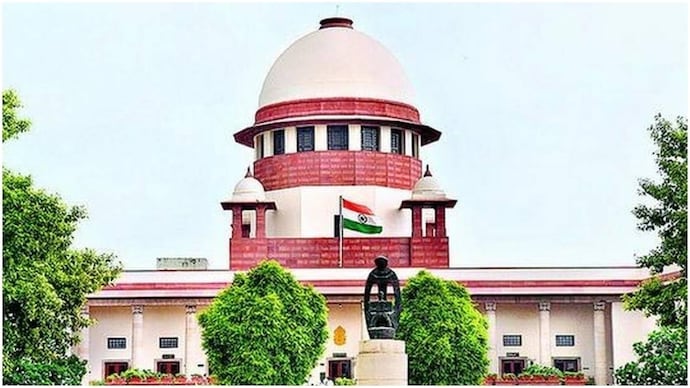
Foreigners Voting Rights India Aadhaar Supreme Court – Can Non‑Citizens Vote with an Aadhaar?
Explore whether foreigners can vote in India with Aadhaar, the Supreme Court hearing on foreigner voting, the petition against it, and the legal impact on India election laws.
Unpacking the Debate on Foreigners Voting Rights India Aadhaar Supreme Court
Imagine a person from a neighbouring country who has lived and worked in India for years. They have an Aadhaar card to access basic services. When election season arrives, they hold this card and wonder, “Does this give me a voice? Can I vote?” This simple question opens up a huge and important debate about foreigners voting rights India Aadhaar Supreme Court.
This blog post tackles this very question head-on: can foreigners vote in India with Aadhaar? The answer is not as simple as a yes or no. It involves our laws, our courts, and the security of our democracy.
We will explore everything you need to know. We’ll look at India’s voting laws, the court case that brought this issue to light, and what the Supreme Court hearing on foreigner voting India is all about. We will also examine the arguments from all sides and what a final court decision might mean for the future of elections in India.
Current Legal Framework – Who Is Eligible to Vote?
To understand the controversy, we first need to know the rules. India’s laws are very clear about who can and cannot vote. These rules are the foundation of our democratic process.
The Constitutional Basis for Voting
The most important rulebook for our country is the Constitution of India. Article 326 of the Constitution clearly states that voting is a right reserved for citizens of India.
To be eligible to vote, a person must:
- Be an Indian citizen.
- Be at least 18 years old.
- Be a resident of the area where they wish to vote.
- Not be disqualified for any other reason (like being of unsound mind).
Another important law, the Representation of the People Act, 1951, reinforces this rule. It guides how elections are conducted and confirms that only Indian citizens can be on the voter list. The Citizenship Act, 1955, defines who is an Indian citizen, whether by birth, family, registration, or naturalisation. These India election laws foreigners Aadhaar rules are designed to protect the integrity of our elections.
The Role of Aadhaar in the Legal System
So, where does the Aadhaar card fit in? Aadhaar is a 12-digit number given to residents of India. It uses your fingerprints and eye scan to prove who you are. The Unique Identification Authority of India (UIDAI) issues it. Its main purpose is to help people get government benefits and services more easily.
However, a critical point has been clarified by the Supreme Court itself. The court has said that an Aadhaar card is not proof of citizenship. It is only a proof of identity. The court stated, “Aadhaar is a creation of statute for availing benefits; it is not proof of citizenship.”
(https://english.mathrubhumi.com/news/india/should-intruders-with-aadhaar-be-made-voters-sc-asks-amid-sir-row-ay88h4q5)
The Election Commission of India agrees. They have clearly told the Supreme Court that Aadhaar is only used to check a person’s identity when they register to vote. It does not prove they are a citizen. This is a key point when discussing Aadhaar card for voting rights foreigners. The Election Commission has already issued instructions on using Aadhaar as proof of identity, not citizenship.
(https://economictimes.com/news/india/instructions-on-using-aadhaar-as-proof-of-identity-not-citizenship-already-issued-ec-to-sc/articleshow/125345580.cms)
The Spark of Controversy – Petition Against Foreigners Voting
If the law is so clear, why is there a debate? The issue came to the forefront because of a legal challenge filed in the Supreme Court. This case questioned whether the rules were being followed properly.
Origin of the Petition
A petition against foreigners voting in India was filed by a group of concerned citizens, including senior lawyers and non-governmental organisations (NGOs). They were worried about the health and fairness of India’s elections.
Their main request to the court was simple. They asked for a clear order to the Election Commission to make sure that non-citizens who have Aadhaar cards are not added to the voter lists. They wanted to close any possible loophole that could let non-citizens vote.
Core Arguments of the Petitioners
The group that filed the petition made three main arguments to the Supreme Court. They believed these points showed a serious risk to our democracy.
- The Aadhaar Loophole: They argued that because non-citizens (like long-term workers or residents) can get an Aadhaar card, a dangerous loophole exists. Someone could mistakenly or illegally use their Aadhaar card to get registered as a voter, even if they are not a citizen.
- Weakening of Election Laws: The petitioners stated that if Aadhaar is used as the main document for voter registration, it undermines the strict India election laws that demand proof of citizenship. They believe relying on an identity document for a right reserved for citizens is a mistake.
- National Security Risks: The most serious concern was about national security. They argued that if foreign agents or “intruders” could get onto our voter lists, they could influence our elections. This could affect who governs the country and what policies are made, posing a threat to India’s sovereignty.
The seriousness of these arguments is what led to the Supreme Court hearing on foreigner voting India, pushing the judiciary to examine the process closely. The debate over the Aadhaar card for voting rights foreigners was now in the nation’s highest court.
Inside the Supreme Court – Arguments & Proceedings
When a case this important reaches the Supreme Court, every word and question matters. The hearings provide a clear picture of how the judiciary is thinking and what is at stake.
A Procedural Overview
The case has moved through several key stages. Let’s imagine a timeline:
- First Hearing (12 October 2025): The court accepted the petition and asked the government and Election Commission to respond.
- Latest Hearing (27 November 2025): This was a critical hearing where the court asked some very direct questions.
The main parties involved in this Supreme Court hearing on foreigner voting India include:
- The Petitioners (the group that raised the alarm).
- The Union Government of India.
- The Election Commission of India (ECI).
- The Unique Identification Authority of India (UIDAI).
- Other groups interested in fair elections.
The Supreme Court’s Core Questions
During the hearing, the judges, led by Chief Justice Surya Kant, cut straight to the heart of the matter. The Chief Justice asked a powerful question: “Should intruders with Aadhaar be made voters?”
(https://english.mathrubhumi.com/news/india/should-intruders-with-aadhaar-be-made-voters-sc-asks-amid-sir-row-ay88h4q5)
This single question showed the court’s deep concern. The use of the word “intruders” highlighted the national security angle of the petition. The court also repeated its earlier stance, observing that Aadhaar is not proof of citizenship. This highlighted the central theme of the foreigners voting rights India Aadhaar Supreme Court debate.
Arguments Presented in Court
Each side presented its case, creating a detailed legal discussion.
- The Petitioners: They stuck to their main point: there is a real risk of non-citizens getting voting rights. They urged the court to order a strict verification process where citizenship is the only thing that matters.
- The Government and UIDAI: Their lawyers argued that Aadhaar’s role is limited. They explained that it is just one of many identity documents. The responsibility to prove citizenship lies with the applicant, who must provide other documents like a passport or birth certificate.
-
The Election Commission: The EC assured the court that it has strong systems in place. It explained that it has the full authority to check all documents. The EC also stated a crucial procedural safeguard: if anyone is found to be ineligible and removed from the voter list, they will be sent a notice of deletion and given a chance to argue their case.
(https://english.mathrubhumi.com/news/india/should-intruders-with-aadhaar-be-made-voters-sc-asks-amid-sir-row-ay88h4q5)
Procedural Safeguards Highlighted by the Court
The court paid close attention to the rights of genuine citizens. It emphasised that while cleaning up the voter rolls is important, no eligible citizen should be wrongly removed.
The requirement for a notice of deletion is a key part of this. This means the Election Commission cannot silently remove a name. They must inform the person and give them an opportunity to prove their eligibility. This ensures the process is fair and transparent. The ongoing case helps clarify if can foreigners vote in India with Aadhaar by testing these very procedures.
Legal & Constitutional Implications
The Supreme Court’s final decision will have a lasting impact. It’s about more than just one case; it’s about setting clear rules for the future of our democracy and what it means to be an Indian citizen.
Citizenship vs. Identity Verification
The entire case boils down to one fundamental difference: checking someone’s identity versus checking their citizenship.
- Identity Verification: This answers the question, “Are you who you say you are?” An Aadhaar card, with its biometric data, is excellent for this.
- Citizenship Verification: This answers the question, “Are you a legal citizen of this country?” This requires documents like a passport, a birth certificate showing your parents’ citizenship, or a citizenship certificate from the government.
The Supreme Court has made it clear that these two things are not the same. It has stated that Aadhaar “cannot be used as proof of citizenship.” This separation is vital for protecting our electoral system. The debate over Aadhaar card for voting rights foreigners hinges on keeping this line from being blurred.
(https://english.mathrubhumi.com/news/india/should-intruders-with-aadhaar-be-made-voters-sc-asks-amid-sir-row-ay88h4q5)
Impact on the Definition of Indian Citizenship
If the court were to allow Aadhaar to be used as a primary document for voting, it could create confusion. The Citizenship Act, 1955 sets out clear and strict rules for who is a citizen. Allowing an identity document to substitute for citizenship proof could weaken these constitutional criteria. It would blur the lines and could open the door to future legal challenges regarding India election laws foreigners Aadhaar.
The ongoing foreigners voting rights India Aadhaar Supreme Court case is therefore essential in reinforcing the legal definition of citizenship in the context of democratic rights.
Sovereignty & National Security Concerns
The petitioners’ arguments about national security are not to be taken lightly. A country’s ability to control who votes is a core part of its sovereignty—its power to govern itself.
If foreign nationals could influence election outcomes, they could potentially affect India’s policies on defence, foreign relations, and the economy. Ensuring that only citizens vote is a direct way of protecting the nation’s independence and security from outside influence.
Potential Impact of a Supreme Court Ruling
The final judgment in this case will set a precedent for years to come. Depending on what the court decides, the impact on India’s election process could be significant. Let’s explore the possible outcomes.
Scenario A – Ruling Reinforces the Current Framework
This is the most likely outcome based on the court’s questions and observations so far.
In this scenario, the Supreme Court would issue a clear ruling that reinforces existing laws. It would order that only official citizenship documents can be accepted for voter registration. The role of Aadhaar would be strictly limited to identity verification, perhaps as a secondary check.
- Effect: This would strengthen the integrity of our electoral rolls. It would make the India election laws clearer and more difficult to bypass. It would also build public trust by showing that the system is secure. This decision would set a powerful precedent for how other identification-based services are handled in the future.
Scenario B – Ruling Expands Aadhaar’s Role (Unlikely)
This is a hypothetical and much less likely scenario.
If the court were to decide that Aadhaar could be used as a supplementary proof of citizenship, it would cause a major shift. This would almost certainly require Parliament to make changes to the Representation of the People Act.
- Potential Risks: This could lead to a higher risk of foreign enrolment in the voter lists. It would create significant national security challenges. Furthermore, such a ruling would likely face immediate legal challenges on the grounds that it violates the Constitution’s core principles of citizenship.
The ongoing Supreme Court hearing on foreigner voting India is carefully weighing these risks.
International & Domestic Perception
How the world and our own citizens see our democracy is important. A ruling that strengthens verification and protects the electoral process will boost India’s image as a robust and secure democracy.
On the other hand, any decision that appears to weaken the citizenship requirement for voting could attract criticism, both at home and abroad. It could lower public trust in the fairness and accuracy of the electoral rolls. The final outcome of the foreigners voting rights India Aadhaar Supreme Court case will be watched closely around the world.
Conclusion – The Way Forward
So, let’s return to our original question: can foreigners vote in India with Aadhaar?
The answer under current Indian law is a clear and definite no. Voting is a right reserved exclusively for Indian citizens. The Supreme Court is currently working to ensure this principle is protected in practice, not just on paper. The core message from the court is that Aadhaar is a tool for identity, not a passport to the ballot box.
The way forward lies in creating a robust, multi-layered verification system. This means the Election Commission must use a combination of documents, technology, and physical checks to confirm both identity and citizenship. Protecting the sanctity of our voter lists is essential for protecting our democracy itself.
Ultimately, the debate on foreigners voting rights India Aadhaar Supreme Court serves as a vital health check for our electoral system, ensuring that the voice of the Indian citizen remains clear, secure, and undiluted.
To stay updated on this crucial case, you can follow the news and updates from the Supreme Court of India.
Frequently Asked Questions
Q: Can a foreigner get an Aadhaar card in India?
Yes, residents of India, including foreigners who have resided in India for a certain period, can obtain an Aadhaar card. However, it is crucial to understand that Aadhaar is not proof of citizenship.
Q: Is Aadhaar sufficient proof of citizenship for voting?
No, Aadhaar is not sufficient proof of citizenship for voting. The law clearly states that only Indian citizens are eligible to vote. While Aadhaar can be used for identity verification during the voter registration process, it does not grant voting rights to non-citizens.
Q: What documents are required to prove citizenship for voting?
To prove citizenship for voting purposes, individuals typically need to provide official documents such as a passport, birth certificate issued by a competent authority, or any other document recognized by law that establishes Indian citizenship.
Q: What is the main concern in the Supreme Court case about foreigners voting and Aadhaar?
The main concern is the potential for non-citizens to be wrongly included in voter lists and cast votes, thereby undermining the integrity of India’s electoral process and national security. The petition highlights the risk that Aadhaar, being obtainable by residents, could be misused to gain voting rights by those who are not Indian citizens.
Q: What is the Election Commission of India’s stance on Aadhaar for voter registration?
The Election Commission of India has clarified to the Supreme Court that Aadhaar is used only as a tool for identity verification during voter registration. It is not considered proof of citizenship. The EC has established procedures to ensure that only eligible citizens are enrolled as voters.