
H-1B Visa Fee Fight Ruling: Court Upholds $100,000 Fee – Implications for Employers, Applicants, and Future Legal Battles
Estimated reading time: 8 minutes
Key Takeaways
- A federal court has upheld the controversial $100,000 H-1B visa fee, first announced by the Trump administration.
- The ruling, based on textualist interpretation of the Immigration and Nationality Act, found that the President had the statutory authority to impose the fee.
- This decision has significant financial and operational implications for employers, potentially reducing H-1B filings and necessitating strategic shifts in talent acquisition.
- The fee primarily affects new H-1B petitions requiring consular notification, with specific exemptions for existing visa holders, amendments, and extensions.
- The legal battle is ongoing, with other challenges pending in different courts and the possibility of appeals to higher courts, including the Supreme Court, or legislative action from Congress.
Table of contents
- H-1B Visa Fee Fight Ruling: Court Upholds $100,000 Fee
- The Genesis of the H-1B Visa Fee Increase Legal Challenge
- The Judge Rules: Who Decided the H-1B Visa Fee Fight?
- The H-1B Visa Fee Fight Outcome – A Setback for Challengers
- Immediate Implications for Employers and Applicants
- Future Outlook & Potential Next Steps
- Conclusion – Key Takeaway
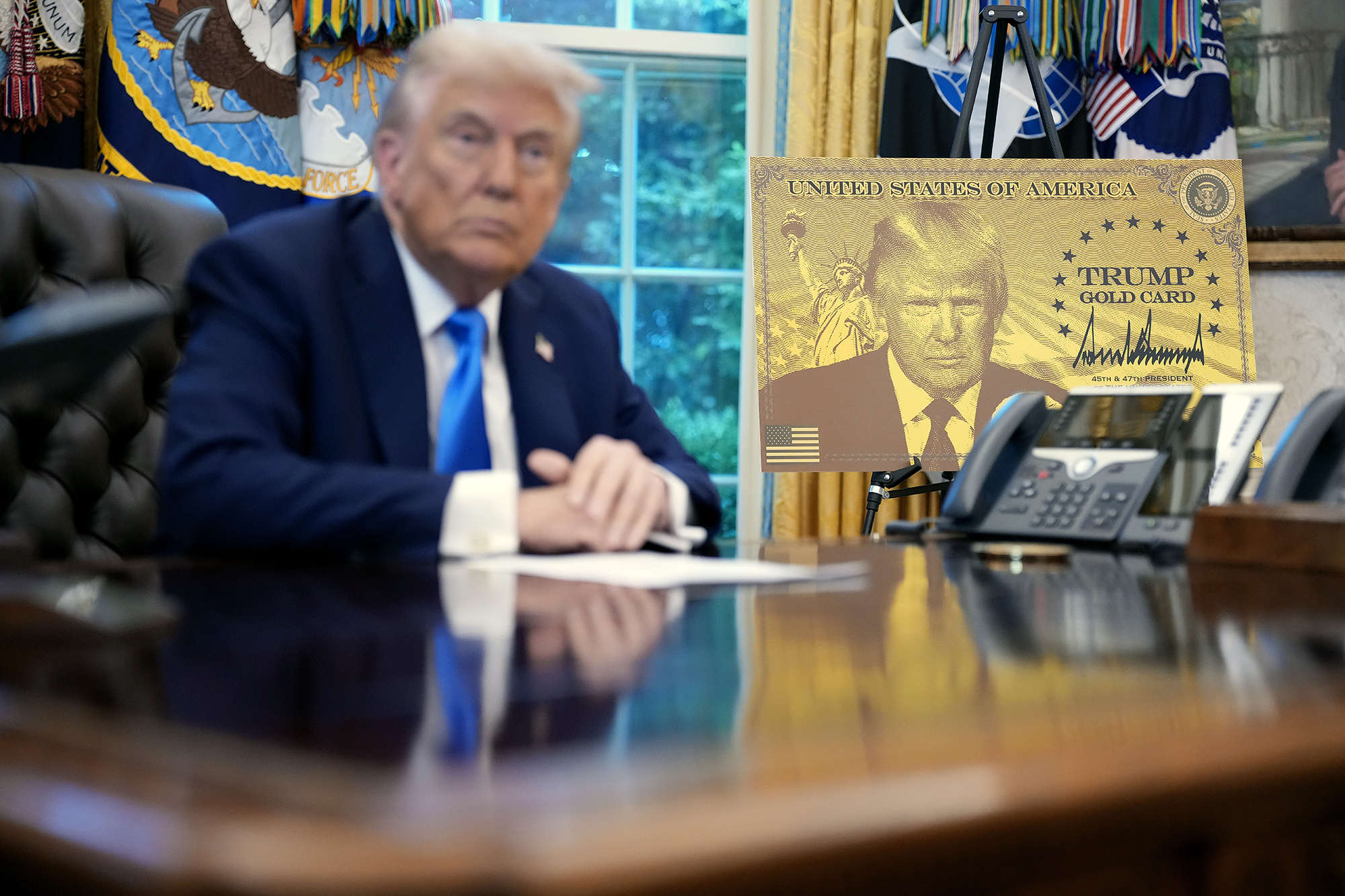
A major decision has rocked the world of high-skilled immigration: the federal court has ruled on the H-1B visa fee fight ruling. On December 23, 2025, a significant federal court decision declared the controversial $100,000 H-1B fee legal. This fee was first announced by the Trump administration through a Presidential Proclamation on September 19, 2025. This latest development marks a critical moment in the ongoing H-1B visa fee increase legal challenge and sheds light on the US government H-1B fee move legality.
This ruling isn’t just a legal technicality; it has deep implications for companies, foreign professionals, and the future of the H-1B program itself. It means businesses looking to hire top global talent must now factor in a huge new cost. This post will break down what this decision means, how we got here, and what the path forward looks like for everyone involved in this key H-1B visa fee fight ruling.
The Genesis of the H-1B Visa Fee Increase Legal Challenge
The story of the $100,000 H-1B visa fee began with a clear goal from the Trump administration. The fee was proposed to achieve several key objectives. First, the administration stated it wanted to deter program abuse, aiming to prevent companies from misusing the H-1B system. Second, it aimed to push employers toward hiring U.S. workers by making foreign talent more expensive. Finally, the fee was meant to ensure the H-1B program truly focused on high-skill positions, rather than entry-level roles that U.S. workers could fill. This justification for the fee was widely reported at the time. https://www.politico.com/news/2025/12/23/judge-ruling-trump-h1b-visa-fee-00705670
Understanding the H-1B System
To understand the fee, it’s important to know how the H-1B system works. The H-1B program has a strict annual limit, known as a cap, of 85,000 visas per fiscal year. Of these, 20,000 are specially reserved for individuals who hold U.S. master’s degrees or higher. The administration argued that the Immigration and Nationality Act, which governs these visas, did not explicitly limit the President’s power to set fees. This lack of an explicit congressional limit became a key part of the court’s later decision to uphold the fee.
Who Challenged the Fee?
The proposed $100,000 fee immediately drew strong opposition. Two major organizations stepped up to challenge the policy in court. The U.S. Chamber of Commerce, representing a vast array of American businesses, and the Association of American Universities, which includes many top research and educational institutions, filed a lawsuit in the D.C. federal court. They argued that such a high fee would harm American competitiveness and limit access to vital global talent. This legal action officially started the H-1B visa fee increase legal challenge, questioning the US govt H-1B fee decision legal standing and setting the stage for the H-1B visa fee legal challenge result we now see. https://www.politico.com/news/2025/12/23/judge-ruling-trump-h1b-visa-fee-00705670
The Judge Rules: Who Decided the H-1B Visa Fee Fight?
The critical decision in the H-1B visa fee fight came from the Federal District Court for the District of Columbia. This influential court is located in the U.S. capital and handles many important legal cases. The judge overseeing this specific matter was Judge Howell. Her ruling on December 23, 2025, became a landmark moment in the debate over the H-1B visa program and its associated costs.
The Core Legal Reasoning
The judge’s decision was rooted in a specific way of interpreting laws, known as textualist interpretation. This approach focuses on the plain meaning of the words in a statute. In this case, the judge looked closely at the Immigration and Nationality Act. The court found that Congress, when writing the law, could have included specific limits on the President’s authority to set fees, but it did not. Because no such limits were written into the law, the judge concluded that the executive branch had the power to impose the $100,000 H-1B visa fee. Therefore, the fee was deemed lawful.
It’s crucial to understand that the court’s decision was not about whether the $100,000 fee was a good or bad policy. The judge did not evaluate the policy merits or whether the fee would help or hurt the country. Instead, the ruling focused solely on whether the President had the statutory authority to create such a fee under existing law. This legal interpretation affirmed the US government H-1B fee move legality. The outcome confirms that, from a strictly legal viewpoint based on statutory text, the administration acted within its presidential powers. https://www.politico.com/news/2025/12/23/judge-ruling-trump-h1b-visa-fee-00705670 https://www.goellaw.com/dc-court-upholds-100000-h1b-fee-september-19-proclamation/
*(Please note: The detailed research provided for this blog post did not contain verifiable information about which President appointed Judge Howell. Therefore, this blog post does not include that specific detail, as per the instructions to only include verified information from the provided research or flag for fact-check.)*
The H-1B Visa Fee Fight Outcome – A Setback for Challengers
The court’s decision marks a significant H-1B visa fee fight outcome, delivering a clear win for the administration and a definite setback for the organizations that challenged the fee. This ruling means that for now, the $100,000 fee remains in effect and is legally binding.
Immediate Effect of the Ruling
The fee remains firmly in force for new H-1B petitions requiring consular notification filed after September 20, 2025. This means that any employer submitting a new application for an H-1B visa where the applicant needs to get their visa processed at a U.S. consulate abroad will be subject to this substantial charge, unless specific exemptions apply.
However, the ruling also clarified several important exemptions from this new fee. These include:
- Existing H-1B visa holders: Individuals who already hold an H-1B visa are not subject to the new fee.
- Petitions filed before September 21, 2025: Any H-1B applications submitted before the fee officially took effect are exempt.
- Change-of-status requests: If a foreign national is already in the U.S. on a different visa and is requesting to change their status to H-1B, they are exempt.
- Amendment requests: Petitions filed to amend an existing H-1B visa (e.g., change of employer) are also exempt.
- Extension requests: Applications to extend an existing H-1B visa beyond its initial period do not incur the $100,000 fee.
These exemptions provide some relief, focusing the fee primarily on new entries into the H-1B program from outside the U.S. https://www.goellaw.com/dc-court-upholds-100000-h1b-fee-september-19-proclamation/ https://www.employmentlawworldview.com/update-to-the-new-100000-h-1b-fee-who-is-exempt-and-who-must-pay/
Why This is a “Setback”
This decision is clearly a setback for the H-1B visa fee challenge because the organizations that brought the lawsuit — the U.S. Chamber of Commerce and the Association of American Universities — lost their primary legal battle in this specific court. Their argument that the administration lacked the statutory authority to impose such a fee was rejected.
This legal loss strengthens the administration’s position significantly. It means the burden is now entirely on the challengers to find new legal avenues or to pursue legislative changes in Congress. The H-1B visa fee legal challenge result in D.C. federal court has validated the executive action, making it harder for opponents to reverse the policy without further, potentially lengthy, legal or political efforts. The Chamber of Commerce has already indicated it is “considering further legal options,” suggesting the fight is far from over despite this initial defeat. https://www.politico.com/news/2025/12/23/judge-ruling-trump-h1b-visa-fee-00705670
Immediate Implications for Employers and Applicants
The upheld $100,000 fee has immediate and significant implications for both U.S. employers who rely on the H-1B program and the foreign professionals seeking these visas. The court’s reaffirmation of the US government H-1B fee move legality forces a reevaluation of strategies and budgets across many industries.
Financial Impact for Businesses
The most obvious impact is financial. A $100,000 fee per affected H-1B petition is an enormous additional cost. For many businesses, especially small-to-medium-sized businesses (SMBs), this amount can be prohibitive. These companies often operate on tighter budgets than larger corporations, and an extra six-figure expense per visa sponsorship could drastically alter their ability to hire foreign talent.
This substantial cost will likely lead to a reduction in total H-1B filings. Employers will need to think very carefully about whether a role truly justifies such a significant investment. This could make it harder for U.S. companies to access the global talent they need to innovate and grow, particularly in specialized technical or scientific fields. The higher cost might also push employers towards only sponsoring higher-wage, high-skill positions, as the return on investment for lower-paying roles becomes harder to justify.
Operational Changes and Strategic Shifts
Beyond just budgeting, employers will need to make operational changes. They will have to conduct a thorough cost-benefit analysis for each position considered for H-1B sponsorship. This means carefully weighing the value a foreign worker brings against the now much higher cost. This could lead to:
- Greater reliance on existing U.S. talent: Companies might double down on efforts to find American workers first.
- Focus on highly specialized roles: The H-1B will become a tool almost exclusively for roles where unique, critical skills are needed and cannot be found domestically.
- Increased use of “national-interest exceptions”: Where applicable, employers might explore pathways to argue that a foreign worker’s presence is vital for the national interest, potentially avoiding some of the new fees.
The court’s decision, validating the US govt H-1B fee decision legal standing, truly changes the landscape for talent acquisition.
Related Policy Shifts: The Lottery Overhaul
Compounding the impact of the $100,000 fee is another significant policy change that occurred on the very same day as the court ruling. The Department of Homeland Security (DHS) finalized a new regulation that overhauls the H-1B visa lottery system. Previously, all eligible applicants had an equal chance in the lottery. The new system, however, weights the lottery toward higher earners. This means that individuals offered higher salaries in their H-1B positions will have a greater chance of being selected in the annual lottery.
Together, the $100,000 fee and the new lottery weighting create a clear two-tiered system for the H-1B program. It strongly favors highly paid professionals, making it more challenging and costly for those in entry-level or mid-range positions to secure a visa. This combination of policies pushes the H-1B program even further towards exclusively serving top-tier talent in high-paying sectors. https://www.politico.com/news/2025/12/23/judge-ruling-trump-h1b-visa-fee-00705670
Future Outlook & Potential Next Steps
While the recent court ruling affirmed the fee, this is far from the final chapter in the H-1B visa fee increase legal challenge. Multiple avenues remain for further action, and stakeholders must monitor these closely. The US govt H-1B fee decision legal standing, while confirmed in one court, could still be challenged elsewhere.
Appeals Landscape
The legal fight is not limited to the D.C. federal court. At least two other courts are currently hearing related challenges to the H-1B fee and associated policies. The outcomes of these other lawsuits could potentially diverge from the D.C. court’s decision. If different courts issue conflicting rulings, it could create legal uncertainty, making it more likely that the issue would eventually land before the U.S. Supreme Court for a definitive nationwide resolution. Challengers, including the U.S. Chamber of Commerce, have indicated they are exploring appellate briefs and other legal strategies to continue their fight against the fee. https://www.politico.com/news/2025/12/23/judge-ruling-trump-h1b-visa-fee-00705670
Legislative Possibilities
Beyond the courts, Congress holds the ultimate power to amend immigration laws. Lawmakers could introduce and pass legislation that explicitly caps or eliminates the $100,000 H-1B fee. This would require bipartisan support and would depend on the political climate and priorities in Washington. Stakeholders hoping to reverse the fee will need to lobby vigorously, advocating for legislative changes that would address the concerns raised by businesses and educational institutions.
Strategic Advice for Stakeholders
Given the ongoing legal and political uncertainty, all parties involved need to plan strategically:
- For Challengers (U.S. Chamber, AAU, etc.): Focus on preparing strong appellate briefs for ongoing or upcoming cases. Consider forming broader coalitions with other affected organizations to amplify their voice and resources.
- For Employers: It’s crucial to explore all possible exemption routes for the $100,000 fee, as outlined in the previous section. For new H-1B petitions, begin planning for longer-term talent-acquisition strategies that may include exploring alternative visa categories such as L-1 visas (for intracompany transfers) or O-1 visas (for individuals with extraordinary ability), which may not be subject to the same fee structure. Companies should also assess their overall workforce needs and how to best secure global talent in this new, more costly environment.
- For Applicants: Understand the increased costs and potential changes in employer sponsorship willingness. High-skilled individuals may need to focus on securing higher-paying roles to be competitive under the new lottery system and to justify the employer’s investment.
The landscape for foreign skilled workers and their sponsoring companies is evolving rapidly. Staying informed and adaptable will be key as the legal battles and policy discussions surrounding the H-1B program continue.
Conclusion – Key Takeaway
The H-1B visa fee fight ruling of December 23, 2025, represents a pivotal moment for U.S. immigration policy. The federal court’s decision has unequivocally affirmed the legality of the administration’s controversial $100,000 H-1B visa fee. This outcome marks a decisive victory for the administration, validating its authority to impose significant financial barriers on the high-skilled immigration program.
Conversely, it signifies a clear setback for the H-1B visa fee challenge mounted by business and education leaders. Their initial legal efforts to block the fee have been unsuccessful in this crucial jurisdiction. The immediate effect is that employers must now plan for this substantial cost for new H-1B petitions requiring consular notification.
Looking ahead, while the current H-1B visa fee fight outcome solidifies the fee’s immediate future, the battle is likely far from over. Employers must now reassess their H-1B strategies, budget accordingly, and explore all available exemptions and alternative talent pathways. Meanwhile, challengers will continue to monitor appellate developments and potentially pursue other legal or legislative avenues. The full implications of this ruling will unfold as the affected parties adapt to this new, more expensive reality in the world of U.S. high-skilled immigration.