
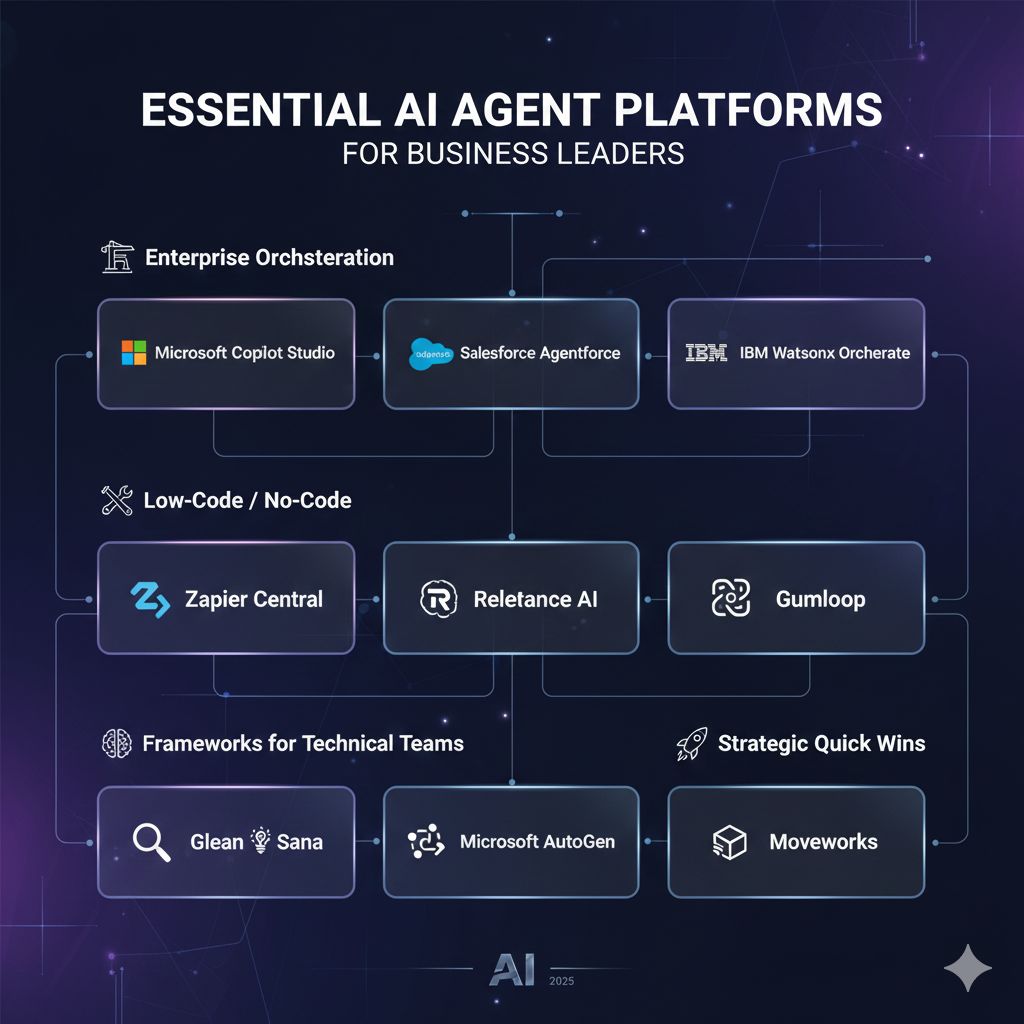
Essential AI Agent Platforms for Business Leaders: Your Guide to Strategic Adoption
The way businesses operate is changing at a rapid pace. New technologies are making tasks faster, smarter, and more efficient. For AI agent platforms for business leaders, understanding these changes is not just an advantage—it’s essential for staying competitive. This guide will help you explore the world of smart, autonomous software and show you how to use it to your advantage.
The Dawn of Autonomous Intelligence for Business
The business world is on the edge of a new era. This is a time when smart software, known as AI agents, takes on complex tasks with little help from people. Experts say we are now in “the decade of AI agents,” marking a huge change for all kinds of businesses. This isn’t just a small step forward; it’s a giant leap in how work gets done.
These intelligent systems are more than simple computer programs. They can understand complex goals, plan steps to reach those goals, and even learn as they go. This makes them incredibly powerful tools. For any leader needing a clear business AI agent platform overview, this guide offers a deep dive. This
The benefits of these smart assistants are already very clear. Businesses using AI agents have seen amazing results. Errors in tasks have gone down by a remarkable 67%. At the same time, the costs of customer service have dropped by 40%. These numbers show how much impact these agents can have.
Beyond cost savings, AI agents also make processes much faster. Business operations can speed up by 30% to 50%. This means companies can get more done in less time, helping them to react quickly to market changes and serve customers better. This is why understanding AI agent platforms for business is so crucial for strategic planning. This
What Are AI Agents and Why They’re Indispensable for Business Growth
To truly benefit from this new technology, it’s important to know what AI agents are. They are not just fancy chatbots. Instead, they are smart, autonomous computer programs. These “digital workers” can sense their surroundings, break down big goals into smaller tasks, and use different tools and systems to get the job done. They even check their own work as they go. This
Think of them as digital employees that can work on their own. They don’t need someone to tell them every single step. Instead, they understand the main goal and figure out the best way to achieve it. This ability to work independently is what makes them so valuable for modern businesses. This
Key Business Functions Enhanced by AI Agents
AI agents are changing how many different parts of a business operate. They bring speed, accuracy, and around-the-clock availability to many important tasks:
- Customer Service: Imagine customers getting instant answers to their questions, any time of day or night. AI agents can handle common requests, guide customers, and even solve problems. This keeps customers happy and frees up human staff for more complex issues. This
- Data Analysis: AI agents can sift through huge amounts of information much faster than people. They can find important trends and insights, helping leaders make better decisions.
- Supply Chain Management: Keeping track of products from start to finish is a huge job. AI agents can monitor supply chains, spot potential problems early, and suggest ways to make things run smoother.
- Lead Qualification: In sales, finding the right customers to talk to is key. AI agents can check new leads, find out if they are a good fit, and prepare them for your sales team.
- Debt Collection: Even in sensitive areas like debt collection, AI agents can help. They can manage communications, offer payment plans, and process payments, making the process more efficient. This
These examples show how AI agent platforms for enterprise can touch almost every part of a company, making it more effective. This
The Strategic Risk of Ignoring Autonomous Agents
For AI agent platforms business leaders know are gaining ground, ignoring this trend is a serious risk. Companies that don’t adopt AI agents may face several problems:
- Bottlenecks: Without automated help, critical tasks can slow down. This creates roadblocks that stop your business from moving forward quickly. This
- Unmet Customer Expectations: Today’s customers expect fast, personalized service. If your competitors offer 24/7 AI-powered support and you don’t, you risk losing customers. This
- Under-Utilized Data: Businesses collect tons of data, but often don’t use it effectively. AI agents can unlock the value in this data, helping you make smarter, faster choices. Without them, this valuable information sits unused. This
- Higher Costs: Manual processes are often more expensive. While competitors cut costs using AI agents, your business might be stuck with higher operational expenses, making you less competitive.
The Strategic Imperative: Why Essential AI Agent Platforms Are Non-Negotiable for Leaders
In today’s fast-paced business world, essential AI agent platforms leaders must prioritize adoption. This isn’t just about getting ahead; it’s about keeping up. AI agents are no longer a luxury; they are a fundamental part of staying productive, driving innovation, and maintaining a competitive edge. This
These intelligent tools automate many tasks, provide constant customer support, and help make choices based on solid data across all industries. This is why key AI agent platforms for management are now a core part of business strategy. Leaders must understand their potential and plan for their use. This
Data-Driven Decision-Making and Innovation
AI agents give leaders new superpowers in how they make decisions and innovate:
- Autonomous Execution: They can perform complex, multi-step tasks without needing constant human input. This frees up managers to focus on big-picture strategies rather than daily operations. This
- Real-time Intelligence: AI agents constantly watch systems and data. They provide instant, useful information, allowing leaders to react to changes immediately.
- Continuous Learning: Unlike old, static systems, AI agents learn and improve over time. This means they get more efficient and effective the longer they run, leading to ongoing benefits for your business. This
Digital Transformation Pillars
AI agent platforms are central to modernizing any business. They help in three main ways:
- Breaking Data Silos: Many companies have data stuck in different departments or systems. AI agents can connect these separate pieces of information. This creates a full, unified picture that helps leaders make better decisions. This
- Accelerating Process Velocity: By automating decisions and actions on a large scale, businesses can respond to market changes much faster—30% to 50% faster, in fact. This This agility is vital in today’s dynamic markets.
- Building Resilience: Automated and adaptable systems make a business stronger. They help companies bounce back from problems and grow quickly without increasing costs too much.
The Competitive Landscape
The market is dividing into two groups. Companies that quickly adopt AI agent solutions are gaining a significant advantage. They are winning more market share because they are more efficient and offer better customer experiences. Businesses that wait are falling behind, losing their relevance to more agile and cost-effective competitors. For leaders, the choice is clear: embrace these tools or risk being left behind. This
Key Considerations for Understanding AI Agent Platforms for Business Adoption
Choosing the right AI agent platform is a big decision for any business leader. It’s not just about picking the flashiest tool. It’s about finding a system that truly fits your company’s needs and goals. This section provides a clear framework for understanding AI agent platforms for business adoption.
Critical Evaluation Framework
When looking at different platforms, consider these important points:
- Autonomous Planning & Execution: Can the platform really work on its own? It should be able to break down a big goal into smaller steps, execute those steps, and check its own progress without constant human help. This self-management is a key part of what makes an AI agent powerful. This
- API & Tool Integration: How well does it connect with your existing business tools? Think about your customer relationship management (CRM), enterprise resource planning (ERP), and data systems. The best AI agent platforms for enterprise will link smoothly with all your different software, making them truly useful. This
- Workflow Orchestration: Can it manage many tasks at once? Can it handle complex sets of actions, especially when multiple agents need to work together? Your business processes are likely complicated, so your chosen platform needs to handle intricate, interconnected workflows that can be triggered by various events. This
- Customization & Developer Flexibility: How easy is it to change the platform to fit your specific needs? Some offer simple drag-and-drop (low-code/no-code) tools, while others provide more advanced ways for developers to customize. Your unique processes will need solutions that can be shaped to fit. This
- Trust, Safety & Control: This is very important. Does the platform have strong security? Can you control who can access what? Does it keep good records (logging) and follow important rules (compliance)? For businesses, having full control and knowing the system is safe is a must. This
- Deployment Model: How will the software be set up? Is it a cloud-based service (SaaS) or will it be installed on your own computers (on-premise)? Consider security, ongoing support, and how it fits with your company’s existing technology rules. This
Architectural Choices: Open vs. Closed Systems
When looking at leading AI agent platforms for leaders, you’ll find different ways they are built:
- Closed Systems: These are often all-in-one solutions, like Microsoft Copilot Studio. They are usually easier to set up quickly but offer less flexibility to customize. This
- Open Systems: Platforms like Relevance AI give you more freedom to build and adapt. They might take more effort to set up, but they allow for much greater tailoring to your company’s exact needs. This
Readiness Assessment Matrix
Before committing to a platform, it’s smart to check your company’s readiness. Think about these areas:
- Technical Readiness: Do your current computer systems allow easy connections (APIs)? Is your data clean and organized? Do you have enough IT staff to help with setting up and maintaining the system?
- Organizational Readiness: Do your employees and leaders understand AI agents? Is everyone on board with the idea, and do you have a senior leader who supports this change?
- Business Case Clarity: Have you picked clear tasks where AI agents will definitely bring value? Do you know what return on investment (ROI) you expect and how long it will take to see results? This
Top & Leading AI Agent Platforms for Leaders—A Detailed Overview
The market for AI agent solutions is growing fast, with many tools designed for different business needs. This business AI agent platform overview highlights some of the top AI agent platforms business leaders are considering. They range from enterprise-level systems to specialized tools for specific tasks, offering diverse solutions for every challenge.
Enterprise-Grade Agent Orchestration
Relevance AI
Best for: Managing many AI agents and building complex processes visually.
Relevance AI is a powerful platform built for big companies. It helps build and manage autonomous agents across different departments. It’s known for its visual workflow builder, which lets both technical and non-technical people design complicated AI processes easily. This
Key Features & Use Cases:
- Visual Workflow Builder: Drag-and-drop tools help create complex automation without coding.
- Enterprise Integration: Connects smoothly with existing large-scale business systems.
- Security & Compliance: Built with strong security and rules for big organizations.
- Multi-Agent Orchestration: Manages many different agents working together across the company.
Benefits for Management / Decision-Makers:
- Faster Setup: Visual tools mean quicker deployment of automated processes.
- High Security: Meets tough security and legal standards for peace of mind.
- Scalability: Grows with your company without big cost jumps.
- Customization: Can be changed to fit your company’s specific ways of working.
Why It Helps with Understanding AI Agent Platforms for Business:
Relevance AI helps leaders see how an open, flexible platform can be adapted to highly specific, complex enterprise needs, showcasing the power of customized agentic solutions. This
Voice-Powered Agent Automation
Retell AI
Best for: Creating ready-to-use voice AI agents that sound human.
Retell AI is a cutting-edge platform for building advanced voice AI agents. These agents are powered by large language models (LLMs) and can have natural, human-like conversations. It’s perfect for businesses that need to deploy voice agents on a large scale. This
Key Features & Use Cases:
- Natural Voice Interaction: Agents can talk and understand like humans.
- Multi-Channel Support: Works across phone calls, online chats, and other communication tools.
- Seamless Integration: Easily connects with other business systems.
- Scalable Deployment: Can handle many calls and conversations at once.
Benefits for Management / Decision-Makers:
- Instant Customer Engagement: Offers immediate help to customers through voice, improving their experience.
- 24/7 Support: Provides constant customer service, reducing the need for large staff teams.
- Complex Task Handling: Agents can schedule appointments or solve detailed questions just by talking.
- Cost Savings: Significantly lowers customer service costs while making customers happier. This
Why It Helps with Understanding AI Agent Platforms for Business:
Retell AI demonstrates the power of specialized agent platforms, highlighting how voice-first strategies can revolutionize customer interaction and support. This
Developer-Centric LLM Workflow Framework
LangChain
Best for: Developers building complex applications using large language models.
LangChain is a powerful framework that helps build applications powered by large language models (LLMs). It makes it easier to create complicated workflows and connects well with major cloud services. This
Key Features & Use Cases:
- LLM Application Framework: Provides tools for building advanced AI applications.
- Cloud Integration: Connects easily with services like AWS, Google Cloud, and Azure.
- Workflow Simplification: Helps manage complex, multi-step tasks involving AI.
- Developer-Focused: Designed for technical teams to build custom solutions.
Benefits for Management / Decision-Makers:
- Faster Development: Reduces the time it takes to build AI-powered business tools.
- Leverage Existing Tech: Uses your current cloud investments more effectively.
- Scalable Growth: Supports expanding from a small test project to a company-wide solution.
- Developer Productivity: Makes technical teams more efficient, speeding up innovation.
Why It Helps with Understanding AI Agent Platforms for Business:
LangChain illustrates how foundational frameworks can empower in-house technical teams to build highly customized, robust AI agent solutions, offering ultimate control. This
Decentralized Multi-Agent Orchestration
Swarms
Best for: Coordinating many AI agents for massive, real-world tasks.
Swarms is a system that allows many AI agents and large language models (LLMs) to work together in a decentralized way. It’s known for automating huge real-world activities by using a “swarm economy” idea, where agents collaborate to achieve a common goal. This
Key Features & Use Cases:
- Multi-Agent Coordination: Enables many agents to work on a single goal.
- Decentralized Architecture: Spreads tasks across different systems, avoiding single points of failure.
- Large-Scale Automation: Capable of automating very large and complex operations.
- Real-World Task Management: Designed to handle the complexities of actual business operations.
Benefits for Management / Decision-Makers:
- Massive Automation: Automates tasks that are too big for a single agent or system.
- Distributed Processing: Prevents slowdowns by spreading the workload.
- Enterprise Scalability: Handles the size and complexity of large company operations.
- Innovative Solutions: Opens doors for new ways to automate and optimize business functions.
Why It Helps with Understanding AI Agent Platforms for Business:
Swarms highlights the potential of multi-agent systems for tackling extremely large and distributed enterprise challenges, moving beyond simple task automation. This
AI-Native Customer Service Automation
Ada.cx
Best for: Automating a significant portion of customer service interactions.
Ada.cx is a platform built specifically for AI-powered customer service. It helps businesses solve a large number of customer questions and issues without needing human staff. This
Key Features & Use Cases:
- AI-Native Design: Built from the ground up for automation, not just added on.
- Multi-Channel Support: Works across various communication channels where customers interact.
- High Resolution Rate: Can solve many customer issues without human help.
- Integration with Support Workflows: Fits into your existing customer support processes.
Benefits for Management / Decision-Makers:
- Big Cost Savings: Significantly lowers the operating costs of customer service.
- Faster Solutions: Improves how quickly customer problems are solved on the first try.
- Consistent Experience: Ensures customers get the same high-quality help every time.
- Scalable Support: Allows customer support to grow without needing more staff.
Why It Helps with Understanding AI Agent Platforms for Business:
Ada.cx illustrates how targeted, AI-first platforms can deliver immediate and measurable ROI by transforming core customer service functions. This
Conversational AI for Enterprise Support
Bland AI
Best for: Providing 24/7 conversational customer support with chatbots.
Bland AI offers AI-powered chatbots that give immediate, round-the-clock customer support. These conversational agents improve how customers interact with your business and make them happier. This
Key Features & Use Cases:
- 24/7 Automated Support: Customers can get help at any hour.
- Instant Responses: Provides immediate answers to questions.
- Multi-Language Support: Helps customers from around the world.
- Enhanced Engagement: Makes customer interactions more engaging and helpful.
Benefits for Management / Decision-Makers:
- Constant Availability: Ensures customers always have access to support.
- Higher Satisfaction: Improves customer happiness through quick responses.
- Global Reach: Covers operations across different time zones and languages.
- Cost-Effective Scaling: Grows support capacity without increasing staff costs.
Why It Helps with Understanding AI Agent Platforms for Business:
Bland AI showcases how accessible conversational AI can be a first step for businesses aiming to quickly enhance customer availability and satisfaction. This
New AI Agent Platforms for Companies: Emerging Innovators
The field of AI agents is constantly evolving, with new AI agent platforms for companies appearing regularly. Two notable emerging players are CrewAI and Agentic Labs.
CrewAI: This platform focuses on building multi-agent systems where different AI agents collaborate on complex tasks, sharing information and delegating work. It’s designed to simulate teamwork among agents, enabling more sophisticated and robust automation for complex business processes. (Source: to be added) This
Agentic Labs: This emerging company is exploring innovative features such as real-time data pipelines and edge-deployed agents. This means their agents can process information instantly and operate closer to where the data is generated, offering benefits for speed and efficiency in specific use cases like manufacturing or IoT environments. (Source: to be added) This
These emerging solutions represent the cutting edge of what’s possible, offering specialized capabilities that will soon become mainstream. They further solidify the need for leading AI agent platforms for leaders to stay informed and adaptable. For key AI agent platforms for management, keeping an eye on these innovators is crucial for future-proofing strategies. This
Your Business Leader Guide to AI Agents: Implementation & Strategic Integration
Adopting AI agent technology requires a clear plan. For a successful business leader guide AI agents deployment, a structured roadmap is essential. This helps ensure that the new technology brings real value without causing unnecessary disruptions.
High-Level Implementation Roadmap
Here’s a phased approach for integrating AI agent platforms into your business:
-
Phase 1: Foundation & Readiness (Weeks 1-4)
- Executive Alignment: Get all top leaders on the same page about what you want to achieve with AI agents.
- Cross-Functional Team: Put together a team with members from IT, operations, and business departments.
- Process Inventory: List and examine all your business processes to find the best ones for automation. This
- Platform Short-list: Identify a few AI agent platforms that seem like a good fit for your needs.
-
Phase 2: Pilot Implementation (Weeks 5-16)
- Select High-Impact Processes: Choose 1-2 important but manageable tasks for a first test (pilot).
- Deploy & Monitor: Set up the chosen platform in a controlled way and watch it closely.
- Set KPIs: Decide on key performance indicators (KPIs) to measure success.
- Gather Data: Collect information on how the pilot is performing against your goals.
-
Phase 3: Learn & Optimize (Weeks 17-24)
- Analyze Results: Look at what worked and what didn’t during the pilot.
- Address Gaps: Fix any problems with integrating the platform or with data rules.
- Refine Processes: Make changes to the automated processes based on what you learned.
- Plan for Scale: Develop a blueprint for expanding the use of AI agents.
-
Phase 4: Scale (Month 7+)
- Expand Adoption: Roll out AI agents to more business processes across the company.
- Formalize Governance: Put clear rules in place for how agents are managed and used.
- Continuous Improvement: Keep looking for ways to make the agents and processes even better.
Common Challenges & Mitigation
Introducing new technology like AI agent platforms for enterprise will always have its hurdles. Being ready for them is key.
-
Change Management:
- The Challenge: Employees may worry that AI agents will take their jobs.
- Mitigation: Explain that agents help by taking over routine tasks, letting employees focus on more creative and important work. Offer training and set realistic timelines for adaptation. This
-
Skill Gaps:
- The Challenge: Your team might not have the skills to build or manage AI agents.
- Mitigation: Work with technology vendors, invest in training for your staff, and start with simpler, “low-code” solutions that are easier to implement. This
-
Data Governance:
- The Challenge: AI agents need good, reliable data, and you need to ensure data privacy and security.
- Mitigation: Check the quality of your data, set clear rules for agent access to information, and keep detailed logs of what the agents do to ensure compliance. This
Strategic Integration Tips
To make the most of your investment in key AI agent platforms for management, integrate them strategically:
- Align with Pain Points: Choose platforms and use cases that directly solve your biggest business problems or unlock major opportunities. This
- Create a Governance Board: Form a group (including leaders from IT, operations, and legal) to oversee AI agent deployment and ensure it aligns with company goals and rules.
- Build Feedback Loops: Regularly review the performance and ROI of your AI agents (e.g., quarterly) to make sure they are delivering expected value and to find areas for improvement.
Measuring ROI
How do you know if your AI agents are working? Measure both quantitative and qualitative returns:
-
Quantitative Metrics:
- Cost Reduction: Track savings in labor hours, operational expenses, or time spent on tasks.
- Cycle-Time Improvement: Measure how much faster processes are completed.
- Error Reduction: Monitor decreases in mistakes, referencing the 67% reduction seen in some implementations. This
- Revenue Uplift: Look for increased sales or new revenue streams due to improved efficiency or customer experience.
-
Qualitative Benefits:
- Employee Satisfaction: Survey staff to see if they feel more engaged or less burdened by routine work.
- Customer NPS: Measure customer loyalty and satisfaction scores (Net Promoter Score).
- Agility Score: Assess your company’s ability to adapt quickly to market changes.
It’s important to be realistic about the timeline for seeing full value. Initial deployments might take 3-6 months, with the biggest benefits showing up over 12-24 months as your systems and teams fully adapt. This
Conclusion: Embracing the Future with AI Agent Platforms for Business Leaders
The future of business is here, driven by smart, autonomous technologies. AI agent platforms for business leaders are not just a trend; they are a fundamental shift that will redefine efficiency, innovation, and competition across industries. The evidence is clear: AI agent platforms are proving to be transformative technology across a wide range of industries. This
For leaders who want to stay ahead, understanding AI agent platforms for business is no longer optional. It’s a strategic necessity. Those who embrace these tools will gain significant advantages, from faster operations and reduced costs to superior customer experiences. The detailed business AI agent platform overview in this guide equips you with the knowledge to act decisively. This
The impact of AI agents is profound:
- Speed: Business processes can be 30-50% faster, allowing for unprecedented agility. This
- Efficiency: Costs in areas like customer service can drop by 40%, while errors are cut by 67%. This
- Competitive Edge: Early adopters are already securing market share and setting new industry standards.
The path forward involves careful planning and execution. Start with executive alignment, pilot projects in high-impact areas, rigorously measure results, and then scale strategically. This phased approach reduces risk and builds confidence within your organization. The time for deliberation is ending; the time for action is now. This
Your Call to Action
To truly embrace this future, consider these immediate steps:
- Initiate an Executive Workshop: Bring your leadership team together to explore the strategic opportunities AI agents present for your specific business.
- Conduct a Readiness Assessment: Evaluate your organization’s technical, operational, and cultural readiness for AI agent adoption.
- Start a Pilot Program: Identify a high-impact process and launch a small-scale pilot within the next 90 days to gain firsthand experience and measure tangible benefits. This
The organizations that lead in the coming years will be those that integrate essential AI agent platforms leaders strategically and effectively. Don’t wait for perfect conditions. Begin your journey toward intelligent automation today, exploring the leading AI agent platforms for leaders to secure your competitive advantage and drive sustainable growth. This
FAQ
Q1: What is the primary benefit of AI agent platforms for businesses?
A1: The primary benefit is increased efficiency and automation of complex tasks, leading to cost savings, faster operations, and improved decision-making.
Q2: Are AI agents complex to implement?
A2: Implementation complexity varies by platform. Some offer user-friendly interfaces, while others require more technical expertise. A phased approach and pilot projects can mitigate complexity.
Q3: How do AI agents differ from traditional automation tools?
A3: AI agents are autonomous; they can understand goals, plan steps, and adapt. Traditional automation often follows predefined rules and requires more explicit programming.
Q4: What is the potential impact of AI agents on the job market?
A4: AI agents are expected to automate routine tasks, allowing human workers to focus on more creative, strategic, and complex problem-solving roles. Upskilling and retraining will be crucial.
Q5: How can I measure the ROI of investing in an AI agent platform?
A5: ROI can be measured through quantitative metrics like cost reduction, cycle time improvement, and error reduction, as well as qualitative benefits like increased employee satisfaction and better customer retention.