
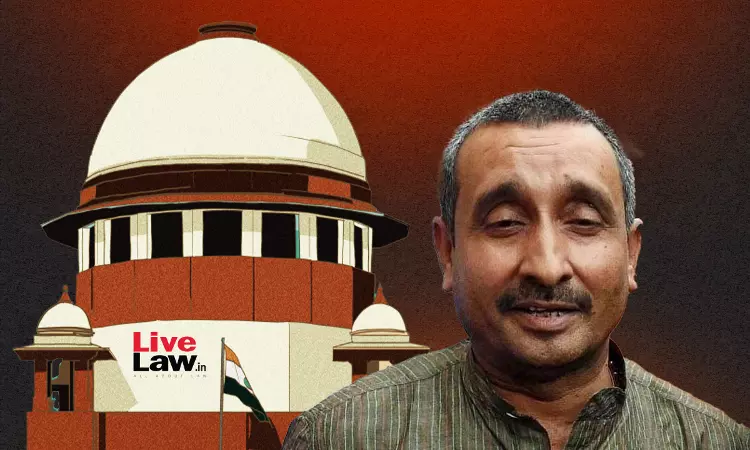
Supreme Court Stays Delhi High Court Bail Order for Expelled BJP Leader Kuldeep Singh Sengar in Unnao Rape Case
Estimated reading time: 8 minutes
Key Takeaways
- The Supreme Court has stayed the Delhi High Court bail order for Kuldeep Singh Sengar, the expelled BJP leader convicted in the Unnao rape case.
- This means Sengar will remain in jail, as the SC intervenes in the High Court’s decision to grant him bail.
- The CBI had challenged the High Court’s bail order, arguing that it was based on flawed legal interpretations, particularly regarding the definition of a “public servant” under the POCSO Act and sentencing calculations.
- The Supreme Court cited “peculiar facts” and the need to keep Sengar in custody while the appeal is heard.
- The ruling sets a potential precedent for how bail is handled for politically influential individuals accused of serious crimes.
Table of contents
- Supreme Court Stays Delhi High Court Bail Order for Expelled BJP Leader Kuldeep Singh Sengar in Unnao Rape Case
- Key Takeaways
- Introduction: The Latest Legal Development
- Background: The Unnao Rape Case and Delhi High Court’s Bail Order
- The Heinous Crime and Conviction
- Delhi High Court’s Controversial Bail Order
- The Supreme Court’s Intervention: Details of the Stay Order
- The Procedural Backdrop of the Challenge
- Key Points of the SC Stay Order
- CBI’s Arguments and Legal Contentions
- The “Public Servant” Definition
- Disputed Sentencing Calculation
- Concerns for Survivor Safety
- Implications of the SC Ruling: What Happens Next
- Immediate Effect on Sengar
- Next Procedural Steps in the Supreme Court
- Broader Legal Impact and Precedent
- Conclusion: Reaffirming Justice and Outlook
Introduction: The Latest Legal Development
In a significant judicial development, the Supreme Court has stayed the Delhi High Court bail order that had granted freedom to Kuldeep Singh Sengar, a former MLA who was expelled from the Bharatiya Janata Party (BJP). This decision means Sengar, who was convicted in the high-profile 2017 Unnao rape case, will remain in jail. The highest court in India has intervened in a case that continues to draw national attention due to the serious nature of the crimes and the involvement of a powerful political figure.
The Supreme Court issued its crucial order on December 29, 2025. This immediate action put the Delhi High Court’s earlier bail decision on hold, ensuring that Sengar remains in custody as legal proceedings continue (Bar & Bench article). The Central Bureau of Investigation (CBI) had filed a petition, challenging the High Court’s ruling and seeking the intervention of the apex court (YouTube coverage).
This story matters deeply because it touches upon fundamental questions of justice, especially for survivors of sexual assault, and how the legal system handles powerful politicians. The SC stays Delhi HC order today is a stark reminder that even individuals with significant influence are subject to the thorough scrutiny of the judiciary. This move, where the Supreme Court stays Delhi High Court bail for such a prominent individual, signals the court’s careful consideration of complex legal and social issues, directly impacting the Supreme Court’s decision on bail appeal. (LiveLaw).
Background: The Unnao Rape Case and Delhi High Court’s Bail Order
The Heinous Crime and Conviction
The Unnao rape case originated from a disturbing incident in 2017 in Unnao, Uttar Pradesh. A then 15-year-old girl was subjected to sexual assault. Following an extensive investigation and trial, Kuldeep Singh Sengar, a former legislator, was found guilty in December 2019. He was convicted under several strict laws, including Section 376 of the Indian Penal Code (IPC), which deals with rape, and Sections 5 and 6 of the Protection of Children from Sexual Offences (POCSO) Act (Bar & Bench).
The trial court handed down a severe sentence: life imprisonment, meaning Sengar was to remain in jail for the remainder of his natural life. This conviction, and the subsequent sentence, highlighted the gravity of the crime and the court’s intent to deliver justice for the child victim. It marked a significant moment in the efforts to hold powerful individuals accountable for such grave offenses.
Delhi High Court’s Controversial Bail Order
On December 23, 2025, the Delhi High Court issued an order that temporarily suspended Sengar’s life sentence and granted him bail (YouTube coverage). This decision by the High Court sparked considerable debate and concern among legal experts and the public. The court’s reasoning was based on a couple of key points that were challenged by the prosecution.
The High Court reasoned that the specific charge of “aggravated penetrative assault” under Section 5(c) of the POCSO Act might “not be made out” in Sengar’s case (Bar & Bench). This section applies to cases where a person in a “position of trust or authority” commits the offense. The High Court further argued that Sengar, as a former MLA, did not fit the definition of a “public servant” as intended by the POCSO Act (LiveLaw analysis). This interpretation of “public servant” was a major point of contention and formed the core of the subsequent challenge.
Furthermore, the High Court considered the time Sengar had already spent in judicial custody. At the time of the bail order, he had served approximately seven years in prison. The court suggested this period might align with the maximum punishment applicable to his conviction, considering the legal framework in place when the crime occurred (Bar & Bench). This reasoning directly led to the Delhi High Court bail order stayed by SC, as the CBI felt it overlooked critical legal principles and facts, leading to a crucial Supreme Court ruling on Sengar bail being sought.
The Supreme Court’s Intervention: Details of the Stay Order
The Procedural Backdrop of the Challenge
Following the Delhi High Court’s decision to grant bail to Kuldeep Singh Sengar, the Central Bureau of Investigation (CBI) swiftly moved to challenge this order. The CBI, which investigated the Unnao case, filed an appeal before the Supreme Court of India. Their petition argued that the High Court’s reasoning was flawed and that Sengar should not be released. This move initiated the process for the apex court to review the lower court’s decision (Bar & Bench).
The CBI contended that the High Court had made errors in interpreting key provisions of the POCSO Act, particularly concerning the definition of a “public servant” and the appropriate sentencing for such severe crimes. The agency emphasized the need to prevent Sengar’s release, citing ongoing risks and public interest concerns. The SC decision on Unnao rape case bail would therefore need to address these crucial points raised by the investigating agency.
Key Points of the SC Stay Order
On December 29, 2025, a special vacation bench of the Supreme Court heard the CBI’s appeal. The bench, which included the Chief Justice of India Surya Kant, Justice JK Maheshwari, and Justice Augustine George Masih, carefully considered the arguments presented (Bar & Bench). The Court acknowledged the general rule that once a person is granted bail, their release order is usually not stayed without first hearing them. However, in this case, a critical detail changed things: Sengar was still in custody in connection with another matter, making the stay order permissible without immediate input from him (LiveLaw).
Chief Justice Surya Kant noted the “peculiar facts” of the case, emphasizing the need to keep the accused, Sengar, in custody for the time being. This particular remark underlined the court’s careful approach to the unique circumstances surrounding this high-profile case (LiveLaw). The Court’s order outlined several clear directives:
- Stay the Operation of the Delhi High Court’s Order: The Supreme Court directly halted the effectiveness of the Delhi High Court’s bail order, preventing Sengar’s release (Bar & Bench).
- Direct Sengar to Remain in Judicial Custody: This means Sengar will continue to be held in jail and cannot be freed based on the High Court’s decision (Bar & Bench).
- Issue Notice to Sengar on CBI’s Petition: The Supreme Court officially informed Sengar about the CBI’s appeal and asked for his response, starting the formal legal process of the appeal (Bar & Bench).
- Allow Four Weeks for Filing a Counter-Affidavit: Sengar or his legal team have a period of four weeks to prepare and submit a written statement (a counter-affidavit) responding to the CBI’s arguments (Bar & Bench).
This clear and direct SC order regarding expulsion leader bail demonstrates the apex court’s authority and its role in overseeing justice. The Supreme Court’s decision on bail appeal means the legal battle for Sengar’s freedom will now be fought at the highest judicial level, ensuring continued detention following the SC stays Delhi HC bail order.
CBI’s Arguments and Legal Contentions
The Central Bureau of Investigation (CBI) presented a robust set of arguments to the Supreme Court, directly challenging the Delhi High Court’s reasoning for granting bail to Kuldeep Singh Sengar. These arguments centered on key interpretations of the law, the appropriate punishment, and the potential impact of Sengar’s release. The agency’s core contention was that the High Court had misapplied legal principles, leading to an incorrect decision (Bar & Bench).
The “Public Servant” Definition
One of the main points of disagreement was the definition of a “public servant” under Section 5(c) of the POCSO Act and Section 376(2) of the Indian Penal Code. The Delhi High Court had held that Sengar, despite being an elected MLA, did not qualify as a “public servant” for the purpose of these sections. This narrow interpretation was crucial because the “aggravated penetrative sexual assault” charge, which carries a higher sentence, often applies when the offender is in a position of authority or a public role (LiveLaw analysis).
The CBI strongly argued that a sitting MLA holds a significant position of trust and authority. As an elected representative, an MLA performs public duties and is entrusted with the welfare of the community. Therefore, the CBI contended, such an individual should indeed be considered a “public servant” under the relevant provisions of the child protection law. This broader interpretation aimed to ensure that those in power are held to a higher standard of accountability, especially when crimes against children are involved (Bar & Bench).
Disputed Sentencing Calculation
Another significant legal contention raised by the CBI concerned the calculation of Sengar’s sentence. The Delhi High Court had suggested that Sengar, having served approximately seven years, might have completed the maximum punishment under the law applicable at the time of the crime. The CBI, however, countered this vigorously.
The agency asserted that the current law mandates a minimum punishment of 20 years of imprisonment for the specific offence Sengar was convicted of. While acknowledging that some amendments to sentencing provisions came into effect after the 2017 crime, the CBI argued that the High Court’s assessment of “time served” was legally incorrect and undermined the severe nature of the offense and the legislative intent behind the POCSO Act (Bar & Bench). This detailed argument on sentencing is a key part of the Kuldeep Singh Sengar bail case Supreme Court review, directly questioning the High Court’s understanding of judicial penalty.
Concerns for Survivor Safety
Beyond the intricate legal interpretations, the CBI emphasized the very real and immediate concern for the safety of the survivor and her family. The agency highlighted Sengar’s history as an influential political figure. His release, the CBI claimed, could pose a serious threat to the victim and her family members, potentially endangering their lives and wellbeing. This concern for the survivor’s security is a critical factor in such sensitive cases and impacts public perception of the justice system (Bar & Bench).
The CBI argued that granting bail to such an influential convict would not only endanger the survivor but also erode public confidence in the judicial process. It could send a wrong message that powerful individuals can secure early release even after being convicted of grave offenses. This broader societal impact, coupled with the legal arguments, reinforced the CBI’s plea for the SC stays bail for expelled BJP leader to maintain justice and security.
Implications of the SC Ruling: What Happens Next
Immediate Effect on Sengar
The most immediate and direct consequence of the Supreme Court’s stay order is that Kuldeep Singh Sengar will remain in custody. His temporary freedom, which was granted by the Delhi High Court, has now been revoked by the highest court in the land (Bar & Bench). This means Sengar cannot be released from jail based on the High Court’s December 23 order. He will continue to be detained, and his legal status will be determined by the ongoing proceedings before the Supreme Court. This ensures that the SC stays Delhi HC bail order has an immediate and tangible impact on his detention. (LiveLaw).
This decision puts Sengar back into judicial remand, reversing the High Court’s attempt to grant him provisional liberty. His continued incarceration underlines the Supreme Court’s power to intervene and enforce legal continuity, especially in cases of public importance. For the time being, any prospect of his release remains on hold, pending the final adjudication by the apex court.
Next Procedural Steps in the Supreme Court
The Supreme Court’s stay order is not the final judgment on Sengar’s bail application or his conviction; it is a temporary measure to ensure continuity of justice while the substantive legal arguments are heard. The Court has outlined a clear path for the next procedural steps in this critical case:
- Four-Week Window for Counter-Affidavit: Sengar’s legal team has been granted four weeks to file a “counter-affidavit.” This is a formal written statement presented to the court, in which they will respond to the specific arguments and claims made by the CBI in its appeal. This submission is crucial for Sengar’s defense and will form a part of the official court record (Bar & Bench).
- Written Submissions and Documentation: After the counter-affidavit is filed, both parties – the CBI and Sengar’s defense – will likely submit further written arguments and relevant legal documents. These submissions will detail their legal positions, cite past judgments, and present their interpretations of the POCSO Act and other relevant statutes.
- Possible Oral Arguments: Following the exchange of written documents, the Supreme Court may schedule a hearing for “oral arguments.” During these sessions, lawyers from both sides will present their cases verbally before the bench, answer questions from the judges, and try to persuade the court of their respective viewpoints. This stage allows for a dynamic and detailed exploration of the legal complexities.
- Final Judgment on POCSO Interpretation and Bail Standards: Ultimately, after considering all written and oral arguments, the Supreme Court will deliver its final judgment. This ruling will not only decide Sengar’s fate regarding bail but will also provide a definitive interpretation of crucial legal points, such as the definition of a “public servant” under the POCSO Act and the standards for granting bail in cases involving powerful individuals convicted of serious crimes. This eventual Supreme Court ruling on Sengar bail will have far-reaching implications.
Broader Legal Impact and Precedent
The Supreme Court’s intervention and its eventual judgment in this matter are expected to have significant broader legal and societal impacts:
- Precedent for Politically Influential Accused: This case will set an important precedent for future bail decisions involving individuals who hold or have held political office, or are otherwise powerful and influential. It will clarify how courts should balance the presumption of innocence (during appeal stages) with concerns about victim safety and the potential for abuse of influence.
- Victim Safety and Statutory Interpretation: The Supreme Court’s willingness to intervene highlights the judiciary’s commitment to victim protection, especially in cases involving child sexual abuse. The ruling will likely emphasize that the safety and well-being of survivors, particularly children, are paramount considerations in bail applications. The ongoing debate about the “public servant” definition will lead to a clearer and perhaps broader interpretation of this crucial clause within the POCSO Act. This will ensure that individuals in positions of trust, regardless of their specific employment status, are held accountable under the stringent child protection laws.
- Application of “Position of Trust” Clauses: The judgment may significantly influence how the “position of trust or authority” clauses in the POCSO Act are applied in the future. It could lead to a more comprehensive understanding of who falls under these categories, especially for those in public life, aiming to prevent misinterpretations that could weaken the law’s protective intent (LiveLaw).
The long-term impact of this case will resonate across the justice system, strengthening the framework for child protection and setting clear guidelines for handling high-profile criminal cases. This reinforces that the Unnao rape case SC judgment today (referring to the pending final judgment) is being carefully deliberated.
Conclusion: Reaffirming Justice and Outlook
The Supreme Court’s decision to stay the Delhi High Court bail order for Kuldeep Singh Sengar is a pivotal moment in the ongoing Unnao rape case. This action means Sengar will remain in judicial custody, preventing his immediate release while the apex court meticulously scrutinizes the complex legal questions raised by the Central Bureau of Investigation (Bar & Bench; LiveLaw).
This intervention reaffirms the critical importance of protecting survivors, particularly children, from sexual offenses. It underscores the judiciary’s commitment to upholding the integrity and strictness of child-protection laws, ensuring that no technical interpretation undermines their fundamental purpose. The Supreme Court stays Delhi High Court bail for the expelled BJP leader signals a proactive approach to justice.
Looking ahead, the next steps will involve detailed written submissions from both legal teams, possibly followed by extensive oral arguments before the Supreme Court. The eventual judgment will not only determine Sengar’s future but also establish significant legal precedents for how courts will interpret key provisions of the POCSO Act and handle future high-profile bail applications involving influential accused individuals. The Unnao rape case SC judgment today (referring to the future definitive ruling) is eagerly anticipated to clarify these vital aspects of law and justice.
FAQ
What is the main reason the Supreme Court stayed the Delhi High Court’s bail order for Kuldeep Singh Sengar?
The Supreme Court stayed the bail order because the CBI challenged it, arguing that the Delhi High Court had made errors in interpreting key provisions of the POCSO Act, particularly concerning the definition of a “public servant” and the calculation of sentencing. The apex court agreed to review these legal arguments.
Will Kuldeep Singh Sengar be released if his appeal is successful in the Supreme Court?
If Sengar’s appeal is successful in the Supreme Court, it means his conviction might be overturned or modified, which could lead to his release. However, the current Supreme Court stay means he remains in custody pending the final decision on the CBI’s challenge to the bail.
What does it mean for Sengar to be “in custody in connection with another matter” as mentioned by the SC?
This likely refers to the fact that Sengar is already serving a life sentence for the Unnao rape conviction. Even though the Delhi High Court had granted him bail in that specific instance, he was still legally detained due to his ongoing sentence for the crime. This technicality allowed the Supreme Court to issue a stay order without necessarily hearing Sengar’s direct response immediately.
What is the significance of the “public servant” definition in this case?
The definition of “public servant” is crucial because certain sections of the POCSO Act, particularly those dealing with aggravated sexual assault, carry enhanced penalties if the offender is in a position of trust or authority, such as a public servant. The CBI argues that an MLA like Sengar fits this description, which the Delhi High Court apparently did not consider sufficiently in its bail order.
How will this Supreme Court ruling impact future cases involving politicians seeking bail?
This case has the potential to set a significant precedent. The Supreme Court’s detailed examination of the bail application, the arguments presented by the CBI regarding influence and victim safety, and the ultimate ruling could influence how courts approach bail requests from politically influential individuals accused of serious crimes, emphasizing accountability and justice for victims.