
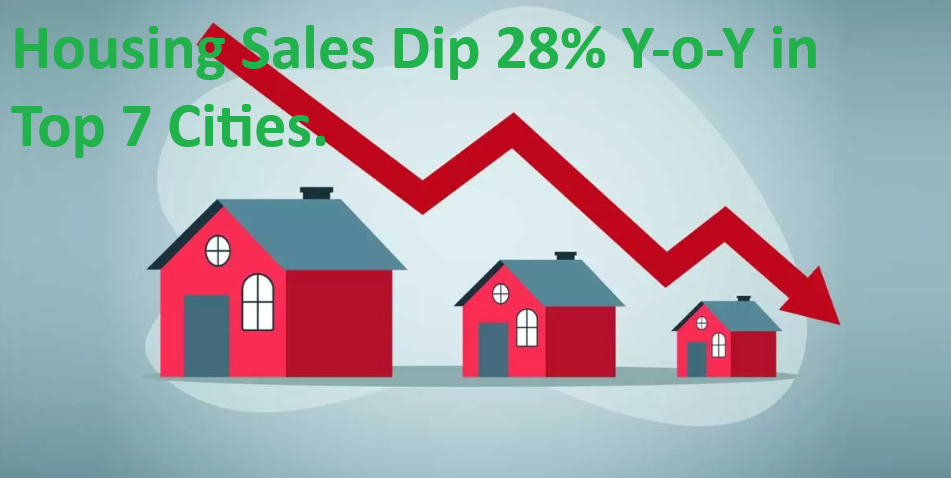
Housing Sale Dip Property Prices Increase: Why Housing Sales Are Dipping with Higher Prices
Introduction: Setting the Paradox
The housing market of 2025 presents a perplexing paradox: how can housing sale dip property prices increase simultaneously? Many homebuyers and observers are scratching their heads as they witness a market where fewer homes are being sold, yet the cost of available properties continues its upward climb. This unexpected trend, where demand seems to be weakening but prices show resilience, goes against the simple supply-and-demand theories often taught in economics. It begs the question: why housing sales are dipping with higher prices?
The purpose of this blog post is to explain the complex relationship between rising property prices and declining sales, shedding light on the underlying factors that contribute to this unique market condition. We will explore how various economic forces are causing housing sales to drop due to property price rise and how the property price increase is impacting housing sales across the nation. For example, recent data shows that U.S. single-family housing starts fell 4.6% in June 2025, reaching 883,000 units—the lowest since July 2024. This notable decline in new construction activity highlights the slowdown, even as property values largely refuse to drop. (Source)
I. The Evident Trend: High Prices, Low Sales Volume
The current real estate landscape is marked by a clear and puzzling trend: a significant increase in available homes for sale coupled with a notable decrease in the number of transactions. This means that while there are more options for buyers, fewer are actually making a purchase. The volume of sales is shrinking, yet the value of homes continues its ascent.
A. Present the Data: Inventory Up, Sales Down
Recent market data paints a vivid picture of this imbalance. Nationwide, housing inventory is up approximately 25% year-over-year. This indicates a greater selection of homes for potential buyers compared to the previous year, suggesting a move towards a more buyer-friendly environment from a choice perspective. However, despite this increase in available properties, pending sales have been down every month of 2025. This shows that many buyers are not completing purchases, even with more homes on the market. (Source)
A significant indicator of this market cooling is the housing market dip 14 percent property price scenario. The National Association of Realtors reported a 14% year-over-year decline in existing-home sales. This substantial drop underscores a broader trend where fewer previously-owned homes are changing hands. The volume of homes being sold, or the housing sales volume decrease property value dynamic, is clearly evident in these figures. These numbers collectively confirm that while there might be more options, the actual transfer of ownership is significantly lower than in previous periods.
B. Weaving Key Market Terms
This widespread slowdown demonstrates a distinct shift in market behavior. The housing sales drop due to property price rise is becoming a defining feature, as potential buyers face increasing financial barriers. The overall property price increase impacting housing sales directly contributes to this reduced sales activity. While home values continue to climb, fewer people are able or willing to commit to a purchase, creating a chasm between asking prices and effective demand. This stagnation is a critical characteristic of the current real estate market, showcasing how higher costs can stifle transactions even when choices are more abundant.
II. Decoding the Economic Drivers Behind the Sales Decline
Understanding why sales are slowing while prices remain high requires a closer look at several key economic factors. These drivers create significant challenges for both buyers and sellers, shaping the unique dynamics of today’s housing market.
A. The Affordability Crunch: The Rate-Price Double Whammy
One of the most powerful forces impacting current home sales is what experts term the “rate-price double whammy.” This refers to the compounding effect of both soaring home prices and rapidly increasing mortgage interest rates, which together make homeownership significantly less affordable. This is a primary reason for the real estate sale decrease property cost paradox, where falling sales don’t necessarily lead to falling prices.
Let’s break down this double whammy. Between July 2019 and July 2021, the median list price of homes rose by 18.6%. However, during this period, the typical monthly mortgage payment increased by a much smaller 9.2%. This was largely due to historically low interest rates, which kept borrowing costs down despite rising home values. (Source)
The situation changed dramatically after 2021. Since then, while home prices have continued to climb another 16%, the monthly payment on a median-priced home has surged by approximately 60%. This means monthly costs have risen nearly four times faster than home prices in recent years. This explosive growth in monthly payments is a direct result of higher interest rates, making homes far less accessible. (Source)
The impact on household budgets is clear. Over the last five years, per-person income in the U.S. has increased by about 25% in nominal terms. In contrast, home prices have grown by a staggering 55% during the same period. This widening gap between earnings and home costs creates a significant affordability gap. Furthermore, rising mortgage rates have seen the cost of borrowing jump from 3% to more than 6%, and many U.S. counties have also experienced notable increases in property taxes and insurance premiums. These combined expenses exert immense pressure on potential buyers, highlighting the profound effect of rising property prices on housing market sales. (Source)
B. Eroding Purchasing Power & the Lock-In Effect
Another critical factor driving the sales decline is the erosion of purchasing power, closely tied to persistently high interest rates and a phenomenon known as the “lock-in effect.” Even as the Federal Reserve has adjusted rates, mortgage costs have remained stubborn. As of early October 2025, the 30-year fixed mortgage rate stood around 7.2%. This is significantly higher than many expected, with some forecasts predicting rates below 6% by this time. (Source) J.P. Morgan forecasts that these rates might only ease slightly to about 6.7% by the end of 2025, still far above levels that would stimulate a surge in buyer demand. (Source)
This elevated interest rate environment directly contributes to the housing sales volume decrease property value dilemma. Higher rates mean higher monthly payments, reducing what buyers can afford even if the home’s sticker price stays the same. The true cost of ownership is effectively higher. Experts suggest that the market won’t see a significant shift until mortgage rates drop closer to 5% or even lower. However, current projections do not anticipate rates falling below 6% in 2025. (Source)
Adding to this challenge is the “lock-in effect.” This term describes a situation where a large majority of existing homeowners have mortgage rates significantly lower than current market rates. More than 80% of mortgage borrowers are 100 basis points (1%) or more “out-of-the-money,” meaning their current interest rate is considerably better than what they would get if they bought a new home today. (Source) This creates a powerful disincentive for these homeowners to sell. Moving would mean trading their low-rate mortgage for a much higher one, making their new monthly housing costs substantially greater. This “lock-in” is a major reason for the limited supply of homes for sale, as homeowners are choosing to stay put for longer. It significantly contributes to the impact of property price hike on home sales, by reducing the number of existing homes available to new buyers.
C. Buyer Hesitation & Market Uncertainty
Beyond the concrete financial hurdles, a pervasive sense of market uncertainty and buyer hesitation is also playing a significant role. This psychological factor leads to inventory growth, as homes sit longer, while simultaneously keeping potential buyers on the sidelines. In this environment, the housing market downturn property price surge creates a confusing signal for many. (Source)
Prospective homebuyers are often adopting a “wait-and-see” approach. They are asking themselves if prices will drop, if interest rates will finally come down, or if a more stable market will emerge. This cautious behavior is understandable when faced with such a large financial commitment in an unpredictable market. The lack of clarity on future price trajectories and interest rate movements makes many hesitant to act now.
This hesitation has a tangible impact: homes are spending more time on the market. Longer listing periods have prompted many sellers to pull their homes off the market or postpone selling altogether. This phenomenon, known as delisting, slows down the very inventory growth that could help ease market pressure. In 2025, 21% of homes listed nationwide were delisted, a significant jump from 13% in May. Some areas, like Miami, are seeing very high delisting rates, with 59 delistings for every 100 new listings. (Source) These delistings further constrain the supply of available homes, contributing to the paradoxical situation of higher prices and lower sales and explaining why housing sales are dipping with higher prices.
III. Wider Market Impacts
The complex interplay of high prices, elevated interest rates, and buyer hesitation has far-reaching consequences across the entire housing market, influencing everything from how quickly homes sell to regional market variations and the strategies of sellers and builders.
A. Transaction Velocity & Regional Divergence: Effects on Housing Market Sales
One of the most significant impacts is a slowdown in transaction velocity. This means that homes are spending longer periods on the market before being sold, and the overall turnover of properties has decreased. There’s simply less movement in the housing stock, even with more homes available for purchase. This creates a sluggish market where activity itself has become less frequent. This slower pace profoundly affects the effect of rising property prices on housing market sales, turning what was once a fast-paced market into a grinding, uncertain environment. (Source)
However, to truly understand the current market, it’s crucial to recognize that the U.S. housing market is not uniform. It effectively operates as “two different countries stuck together,” with vastly different conditions depending on the region. This housing market downturn property price surge is experienced very differently across various states and metros. (Source)
B. Illustrative Regional Examples: Housing Market Dip 14 Percent Property Price
The regional divide highlights how disparate local conditions are contributing to the national trends.
- South and West Regions: These areas are experiencing a significant oversupply of inventory with very little demand. This is partly due to substantial price appreciation during the pandemic years (2020-2021) and the subsequent impact of higher interest rates, which have made these now-expensive homes even harder to afford. Active inventory in many metros in these regions is 50-70% above pre-pandemic norms. This means there are many more homes sitting on the market, but buyers are scarce. (Source)
- Northeast and Midwest Regions: In stark contrast, these regions are characterized by short supply and resilient demand. Homes here are selling faster than before the pandemic—one to two weeks quicker, respectively—despite the same high mortgage rates and still-climbing property values. Active inventory in every major metro in the Northeast and Midwest remains below pre-pandemic levels, indicating a persistent shortage of homes. This scarcity, combined with steady buyer interest, keeps prices elevated and homes moving quickly. (Source)
Even within these broad regions, specific examples illustrate the dynamic. In California, for instance, the median home price in September was up 6.5% month-over-month, reaching $886,560. This reflects ongoing price pressure despite generally weak demand in parts of the state. (Source) Conversely, in high-demand markets like California, New Jersey, and Washington, affordable homes are particularly difficult to find, and competition remains fierce for the limited stock available. This illustrates the complex nature of the housing sales drop due to property price rise, as the cause and effect vary regionally. (Source)
In essence, while the nation faces a housing market dip 14 percent property price reduction in sales activity, the underlying reasons stem from a supply-demand imbalance that manifests in opposite ways depending on geography: too much supply relative to demand in the South and West, and still too little in the Northeast and Midwest. (Source)
C. Seller & Investor Challenges: Impact of Property Price Hike on Home Sales
The current market environment poses unique challenges for sellers and investors, as the impact of property price hike on home sales is felt across the board. Sellers are finding themselves in a difficult position, caught between their expectations of high prices and the reality of reduced buyer interest.
Many sellers, especially in areas with increasing inventory, face smaller buyer pools. They are losing negotiating power but often resist reducing their asking prices. This resistance contributes to homes sitting on the market longer, requiring price adjustments or leading to delistings. Sellers in oversupply regions, such as the South and West, are experiencing extended listing periods and the psychological toll of their homes not selling quickly. The long-held belief that “home prices always go up” is being tested, creating frustration for those hoping to capitalize on their home equity. (Source)
Even builders are pulling back their activity, despite a national shortage of approximately 4 million homes. This is another layer of the real estate sale decrease property cost paradox. High tariffs, increased financing costs for construction, and buyer hesitancy are making new construction less appealing for developers. This slowdown in building further exacerbates the long-term housing shortage, while simultaneously reducing the demand for new homes, especially at more affordable price points. (Source)
Moreover, the multifamily development sector, which creates apartment buildings, adds another twist. In 2024, multifamily housing development reached a four-decade high with 608,000 new units. However, a significant portion of this construction was focused on high-end units. This trend further misaligns the housing supply with income distribution, meaning that while there might be more apartments, they often aren’t affordable for many households, contributing to the overall housing crisis despite increased building. (Source)
Conclusion: Navigating the New Landscape
The current U.S. housing market is operating under a unique and challenging paradox: housing sale dip property prices increase. This situation is not a simple blip but rather a complex outcome of fundamental economic shifts and evolving market behaviors. The pronounced housing sale decline is a complex interplay of affordability constraints, persistently high interest rates, and buyer sentiment shaped by macroeconomic uncertainty. (Source) (Source)
To summarize, three core drivers define this unusual landscape:
- The Rate-Price Double Whammy: Monthly mortgage payments have risen approximately four times faster than incomes since 2021, making homeownership prohibitively expensive for many. This creates an insurmountable financial barrier for a large segment of potential buyers, severely restricting the property price increase impacting housing sales. (Source)
- The Lock-In Effect: Over 80% of existing homeowners are unwilling to sell because they possess mortgage rates significantly lower than current market rates. This disincentivizes new listings, restricting housing supply and perpetuating market stagnation. This lock-in effect is a major factor in why housing sales are dipping with higher prices, as it limits inventory that would otherwise facilitate transactions. (Source)
- Regional Fragmentation: The national market is deeply divided. Areas in the South and West are experiencing an oversupply of homes with weak demand, while the Northeast and Midwest continue to struggle with undersupply and robust buyer interest. This regional disparity underscores the nuanced effect of rising property prices on housing market sales. (Source)
For potential buyers, the current environment means that despite seeing more homes listed, the actual cost of ownership remains a significant hurdle. It’s crucial to monitor interest rate movements closely and be realistic about potential price adjustments in certain markets.
For sellers, adapting to this new landscape means setting realistic price expectations and preparing for potentially longer market times. Overpriced homes in regions with high inventory will likely struggle to find buyers. Understanding local market nuances is key.
For policymakers, addressing the fundamental supply-demand mismatch remains critical. Encouraging the development of affordable housing and finding ways to alleviate the affordability crisis are essential steps toward a healthier, more balanced housing market.
Ultimately, the market will likely remain in its current state of stagnation—neither a traditional buyer’s nor a seller’s market—until either mortgage rates significantly decline (which is not widely expected before 2026) or home prices adjust downwards to meet the current reality of buyer affordability. This complex housing market downturn property price surge will continue to define the real estate landscape for the foreseeable future.
Want to stay updated on these complex market shifts? Subscribe to our newsletter for the latest market insights and expert analysis, or consult a local real estate professional to understand how these trends impact your specific situation.