
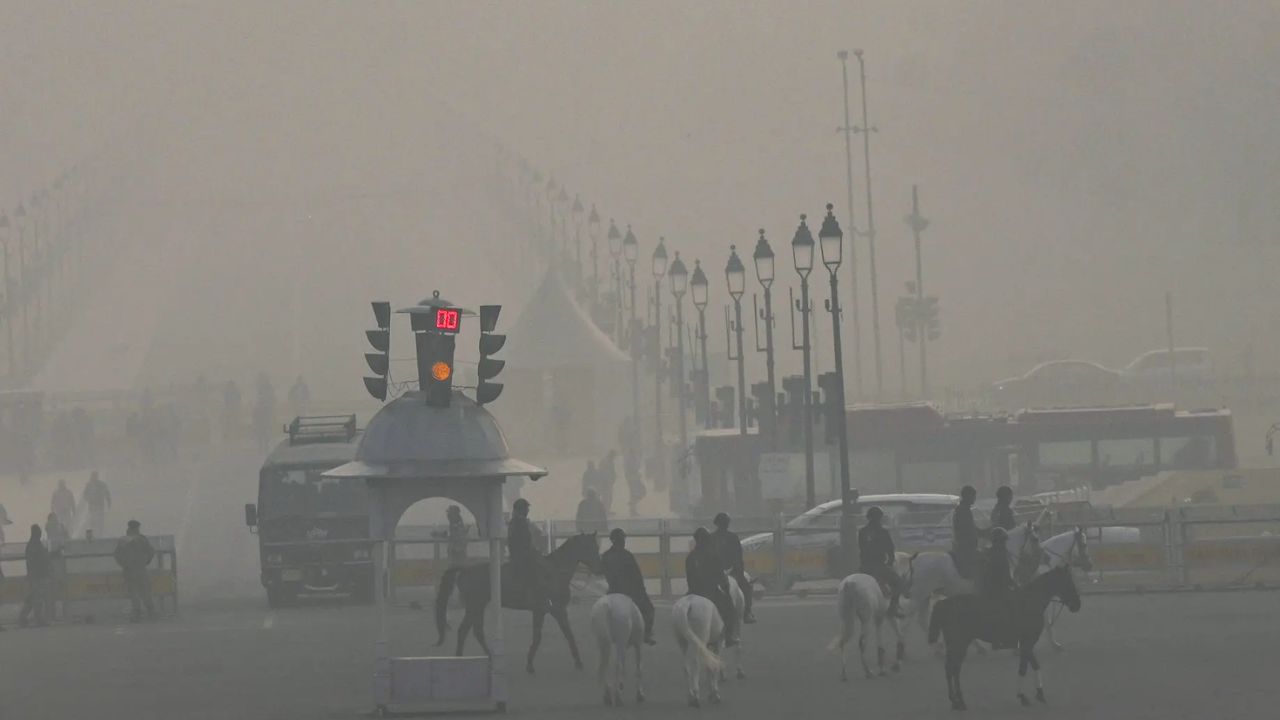
Supreme Court Slams Delhi Air Pollution Measures – What the Verdict Means for the NCR
Estimated reading time: 10 minutes
Key Takeaways
- The Supreme Court has critically assessed Delhi’s pollution control efforts, identifying significant failures.
- The court expressed dissatisfaction with current measures, demanding immediate and drastic action.
- Directives include a one-week deadline for MCD to decide on suspending toll plazas and NHAI to consider their relocation.
- Enforcement against older, high-polluting vehicles (BS-III and below) has been strengthened.
- The verdict signifies a shift towards judicial activism in environmental governance and heightened accountability for agencies.
- It calls for long-term, preventive strategies over reactive measures to combat air pollution effectively.
Table of contents
- Supreme Court Slams Delhi Air Pollution Measures – What the Verdict Means for the NCR
- Key Takeaways
- 1. Introduction: The Alarming State of Delhi’s Air and the Court’s Intervention
- 2. Understanding the Supreme Court’s Stern Verdict on Delhi Air Quality
- 2.1. Explicit Rejection of Minimisation Narratives
- 2.2. Recognition of Multi-Factorial Causation
- 2.3. Severity & Urgency in Judicial Language
- 3. Unpacking the Delhi Pollution Control Failures Highlighted by the Supreme Court
- 3.1. Infrastructure Mis-management & Inter-Agency Disconnect
- 3.2. Weak Vehicle-Emission Enforcement
- 3.3. Reactive Rather Than Preventive Policy Framework
- 4. The Supreme Court’s Mandate: Specific Air Pollution Steps for NCR
- 4.1. Immediate Action on Toll Plazas
- 4.2. Enforcement Against Obsolete, High-Polluting Vehicles
- 4.3. What the Court Refused to Do
- 5. The Broader Implications of Judicial Review on Delhi’s Air Pollution Strategy
- 5.1. Shift Toward an Assertive Environmental Judiciary
- 5.2. Heightened Accountability for State & Central Agencies
- 5.3. Impact on Environmental Federalism
- 5.4. Precedent for Future Litigation
- 6. The Path Forward: Reshaping Delhi’s Air Pollution Measures Post-Verdict
- 6.1. From Reactive GRAP to Preventive Infrastructure Design
- 6.2. Institutionalising Inter-Agency Coordination
- 6.3. Scaling Vehicle-Emission Enforcement
- 6.4. Financial Restructuring
- 6.5. Public Participation & Transparency
- 7. Conclusion: A Call to Action for Cleaner Air
1. Introduction: The Alarming State of Delhi’s Air and the Court’s Intervention
Delhi, India’s bustling capital, frequently grapples with an air pollution crisis that poses severe health risks and disrupts daily life. As winter approaches each year, a thick blanket of smog often envelops the region, pushing air quality into dangerous categories. Despite various governmental initiatives, the problem persists, demanding urgent and effective solutions.
Recent data paints a grim picture: Delhi’s air quality consistently remains in the ‘very poor’ category, often exceeding safe limits by significant margins, even when emergency measures like the Graded Response Action Plan (GRAP) Stage-IV are in effect. This persistent poor air quality indicates a deeper problem with existing Delhi pollution control failures.
Amidst this recurring environmental challenge, the Supreme Court of India stepped in decisively on December 17, 2025. This powerful judicial body initiated a stern intervention, reflecting its growing concern and dissatisfaction with the efforts made to combat air pollution. The Supreme Court slams Delhi air pollution measures with a verdict that demands immediate and significant changes, setting a new tone for environmental governance.
This blog post will delve into the Supreme Court verdict on Delhi air quality, analyzing the court’s sharp criticisms, the systemic failures it brought to light, and the specific directives issued for the National Capital Region (NCR). We will explore how this judicial review of Delhi’s air pollution strategy could reshape future environmental policies and accountability.
2. Understanding the Supreme Court’s Stern Verdict on Delhi Air Quality
The Supreme Court’s recent ruling on Delhi’s air quality was far from a gentle nudge; it was a clear and forceful verdict. The court expressed profound dissatisfaction with the ongoing situation and the perceived inadequacy of governmental responses. The tone of the judges reflected both urgency and a deep-seated frustration with the prevailing conditions.
This judicial scrutiny underscored that the issue of dangerous air pollution levels is not merely an administrative challenge but a profound public health emergency requiring immediate and decisive action. The court’s language suggested that it would no longer tolerate excuses or delays, marking a significant escalation in its role as a guardian of environmental protection.
2.1. Explicit Rejection of Minimisation Narratives
One of the most striking aspects of the Supreme Court’s verdict was its unequivocal rejection of any attempts to downplay the severity of the air pollution problem. During the proceedings, arguments were made suggesting that complaints about traffic congestion, a major contributor to vehicular emissions, might be exaggerated. Chief Justice of India (CJI) Surya Kant quickly dismissed such notions with a powerful statement.
CJI Surya Kant declared, “These are lived realities… not exaggerations. These are truths.” This statement highlighted the court’s insistence on grounding the discussion in the tangible, daily experiences of ordinary citizens. It underscored that air pollution is not an abstract concept or a statistical anomaly but a harsh reality impacting the health and well-being of millions living in Delhi and its surrounding areas.
The court emphasized that people were actively avoiding social functions due to the fear of getting stuck in traffic at toll plazas, thereby being exposed to prolonged periods of toxic air. This direct acknowledgement of public hardship indicated that the judiciary would not tolerate any narrative that sought to diminish the human impact of poor environmental management. The Supreme Court verdict on Delhi air quality explicitly validated the public’s distress.
2.2. Recognition of Multi-Factorial Causation
The Supreme Court’s intervention also demonstrated a sophisticated understanding of the complex, interconnected causes of air pollution in the NCR. While individual factors like industrial emissions and stubble burning are often cited, the court specifically focused on how seemingly localized issues contribute significantly to the broader problem.
A prime example was the court’s emphasis on the role of toll-plaza congestion. It pointed out that vehicles, especially commercial ones, often spend hours stuck in snarls at these collection points. These prolonged periods of idling or slow-moving traffic dramatically increase vehicular emissions, spewing harmful pollutants like particulate matter (PM2.5 and PM10), nitrogen oxides (NOx), and volatile organic compounds (VOCs) into the atmosphere. This highlights a critical failure in automation systems if such infrastructure can cause such environmental damage.
This recognition highlights a critical systemic failure where necessary infrastructure (toll plazas for revenue collection) paradoxically becomes a major contributor to environmental degradation. The court’s holistic view underscores that effective pollution control requires addressing not just obvious sources but also the ripple effects of urban planning and administrative decisions. This shows the court’s view that current Delhi pollution control failures Supreme Court finds must be rectified.
2.3. Severity & Urgency in Judicial Language
The judicial language used by the Supreme Court was imbued with a distinct sense of severity and urgency. This was best exemplified by the concrete, time-bound directives it issued. The most notable was the one-week deadline given to the Municipal Corporation of Delhi (MCD) to decide on the temporary suspension of nine toll plazas. Such a compressed timeline is unusual in judicial proceedings, particularly for complex administrative matters that typically involve lengthy deliberations. This explicit deadline clearly signals the court’s emergency mindset. It communicates that the air quality crisis is beyond the stage of gradual policy development and now requires immediate, decisive administrative action.
The court’s tone conveyed that the time for studies, consultations, and protracted debates had passed, and the moment for implementation had arrived. This urgency reflects a deep judicial concern for public health and a strong desire to see tangible improvements in the air quality of the National Capital Region without further delay. The Supreme Court slams Delhi air pollution measures with directives that leave no room for procrastination.
3. Unpacking the Delhi Pollution Control Failures Highlighted by the Supreme Court
The Supreme Court’s critical examination revealed several systemic and administrative shortcomings in Delhi’s approach to combating air pollution. These weren’t isolated incidents but rather fundamental flaws in infrastructure management, enforcement, and policy strategy. The Supreme Court verdict on Delhi air quality directly addressed these deficiencies.
3.1. Infrastructure Mis-management & Inter-Agency Disconnect
A significant point of contention for the Supreme Court was the problematic management of infrastructure, specifically the operation of toll plazas. The Municipal Corporation of Delhi (MCD) runs nine toll plazas that manage entry points into Delhi. While these plazas serve as a crucial revenue source for the MCD, their location and operation have become a major environmental concern.
The court highlighted how these MCD-operated toll plazas, often situated on or adjacent to National Highways managed by the National Highways Authority of India (NHAI), create significant bottlenecks. These bottlenecks lead to hours-long traffic snarls, particularly for heavy commercial vehicles. This prolonged idling and slow movement of vehicles dramatically increases vehicular emissions, worsening the regional air quality. This situation is a stark example of how poor planning can negate the benefits of otherwise useful automation services.
This situation exposes a critical lack of coordinated impact-assessment mechanisms between different government agencies. There appears to be an absence of a unified strategy where a municipal body’s revenue generation practices are harmonized with national highway traffic management and regional air quality objectives. The disjointed approach illustrates a failure in inter-agency communication and a lack of integrated planning, contributing significantly to the Delhi pollution control failures Supreme Court identified. Without a holistic view, one agency’s operations can inadvertently undermine the environmental efforts of others.
3.2. Weak Vehicle-Emission Enforcement
Another critical failure addressed by the Supreme Court was the inconsistent and often weak enforcement against high-polluting vehicles. Previously, an order had granted protection against coercive action for older vehicles, including those below Bharat Stage (BS) IV emission standards. This meant that many vehicles, particularly diesel vehicles older than 10 years and petrol vehicles older than 15 years, largely escaped strict enforcement.
The court, following a request from the Delhi government’s Additional Solicitor General, explicitly lifted this protection for BS-III and older vehicles. This earlier leniency allowed a significant number of obsolete and highly polluting vehicles to continue operating on NCR roads, directly contributing to the poor air quality. For a country aiming for advanced AI guide adoption, this level of regulatory oversight is concerning.
The practical impact of this policy failure is immense: an estimated 1.2 million vehicles across the NCR, including those in Noida, Ghaziabad, Faridabad, and Gurugram, were affected by this lack of stringent enforcement. Allowing such a large fleet of older, less efficient vehicles to operate unchecked significantly undermined any efforts to reduce vehicular emissions. This regulatory oversight was a key factor in the persistent pollution levels.
3.3. Reactive Rather Than Preventive Policy Framework
The Supreme Court also implicitly criticized the overarching policy framework for air pollution control, characterizing it as largely reactive rather than strategically preventive. The court observed a need for “long-term measures” to contain air pollution, contrasting this with the current reliance on emergency responses. The Graded Response Action Plan (GRAP), for instance, is an emergency plan that kicks in only when air quality deteriorates to specific severe levels. While necessary in a crisis, GRAP’s activation at Stage-IV signifies that preventive actions have already failed. The court’s call for long-term strategies indicates a desire for policies that anticipate and mitigate pollution before it reaches critical thresholds. This is akin to an intelligent agent needing to learn and adapt rather than just react to immediate stimuli.
This reactive approach means that authorities are constantly playing catch-up, implementing temporary fixes during peak pollution seasons rather than investing in sustainable, year-round solutions. It highlights a failure to develop comprehensive blueprints for urban planning, sustainable transport, and green infrastructure that could fundamentally alter Delhi’s pollution trajectory. The Judicial review Delhi air pollution strategy revealed this fundamental flaw in policy design.
4. The Supreme Court’s Mandate: Specific Air Pollution Steps for NCR
The Supreme Court’s verdict was not merely a critique; it came with clear, actionable directives aimed at bringing about immediate and impactful changes in air pollution control across the National Capital Region (NCR). These specific commands demonstrate the court’s determination to move beyond rhetoric and enforce tangible environmental improvements.
4.1. Immediate Action on Toll Plazas
The Supreme Court issued precise instructions regarding the controversial toll plazas operated by the Municipal Corporation of Delhi (MCD), which were identified as significant contributors to traffic congestion and thus, air pollution.
- MCD Directive: The MCD was mandated to decide within a mere one week whether to temporarily suspend the operation of its nine toll plazas. This swift deadline underscores the court’s view of the situation as an emergency, demanding rapid administrative response. The goal of this potential suspension is to ease traffic flow, thereby reducing idling vehicle emissions at these critical entry points.
- NHAI Directive: Concurrently, the National Highways Authority of India (NHAI) was directed to consider the feasibility of shifting these toll plazas entirely out of Delhi’s borders to NHAI-controlled sites. This proactive measure aims to permanently resolve the issue of congestion caused by toll collections within the urban sprawl, ensuring smoother traffic management and better air quality in the long run.
- Revenue Compensation Clause: Recognizing the financial implications for the MCD, the Supreme Court included a pragmatic revenue-compensation clause. It suggested that a portion of the toll revenue collected could be diverted to municipal corporations to offset any losses incurred during a three-month suspension period. This innovative approach balances environmental imperatives with the practical fiscal needs of local bodies. This demonstrates the SC on air pollution steps in NCR are designed for comprehensive impact.
4.2. Enforcement Against Obsolete, High-Polluting Vehicles
A pivotal part of the Supreme Court’s mandate involved strengthening enforcement against vehicles that significantly contribute to atmospheric pollution. The court revised its earlier order to allow for more stringent action:
- Enforcement Thresholds: The court granted permission for authorities to take action against diesel vehicles that are more than 10 years old and petrol vehicles exceeding 15 years old, particularly if they fall below Bharat Stage IV (BS-IV) emission standards. This targeted approach ensures that the most polluting segments of the vehicle fleet are addressed.
- Practical Impact: This decision has a massive practical impact, as it subjects an estimated 1.2 million vehicles across the NCR to potential enforcement actions, including impounding or fines. By removing or restricting the movement of these older, less efficient vehicles, the court aims to significantly reduce tailpipe emissions, a major component of urban air pollution. The Supreme Court verdict on Delhi air quality directly tackles vehicular pollution sources.
4.3. What the Court Refused to Do
While assertive in environmental matters, the Supreme Court also demonstrated judicial restraint in certain areas, acknowledging the domain of democratic decision-making. The court specifically refused to intervene in the Delhi government’s decision to suspend physical classes for young children (nursery to Class 5). This refusal showed respect for the elected government’s judgment on sensitive issues with social implications, such as education and nutrition for underprivileged children who rely on school meals. It highlights a delicate balance: while the judiciary demands accountability for environmental failures, it refrains from overstepping into policy domains best managed by elected bodies, especially when such policies have complex social impacts.
5. The Broader Implications of Judicial Review on Delhi’s Air Pollution Strategy
The Supreme Court’s decisive intervention goes beyond immediate directives; it carries profound implications for environmental governance, inter-agency dynamics, and the future trajectory of environmental law in India. This Judicial review Delhi air pollution strategy is a game-changer.
5.1. Shift Toward an Assertive Environmental Judiciary
The Supreme Court’s December 2025 verdict marks a significant evolution in India’s environmental jurisprudence. Historically, judicial review often focused on upholding existing laws or addressing procedural irregularities. However, this ruling signifies a clear move from passive review to what can be termed “interventionist environmental adjudication.”
The court is no longer content with merely interpreting laws; it is actively shaping policy and demanding specific administrative actions within strict timelines. This assertive stance transforms the judiciary from a mere oversight body into a proactive participant in environmental management, ready to step in when executive and legislative branches fall short. It sets a powerful precedent for future cases where environmental degradation persists despite existing regulations. The Supreme Court verdict on Delhi air quality demonstrates a new era of judicial oversight.
5.2. Heightened Accountability for State & Central Agencies
The explicit one-week deadline for the MCD’s decision on toll plazas, coupled with directives to the NHAI and the Delhi government, establishes a heightened level of accountability. These are not mere recommendations but enforceable obligations, creating direct consequences for inaction or non-compliance.
This approach creates enforceable obligations that were perhaps lacking before. Agencies can no longer rely on bureaucratic delays or vague commitments. The court’s firm hand ensures that environmental responsibilities are now tied to tangible outputs and timeframes. This judicial pressure fosters a culture where agencies must prioritize environmental goals with the same urgency as their core operational mandates. This means the SC on air pollution steps in NCR will likely be followed with more rigor.
5.3. Impact on Environmental Federalism
The issue of MCD-operated toll plazas on NHAI-managed highways revealed a classic tension within India’s system of environmental federalism. Different levels of government (municipal, state, central) have overlapping jurisdictions, often leading to coordination challenges and blame-shifting.
The Supreme Court’s order re-balances this authority by directing both MCD and NHAI to address the issue. By compelling joint action and even suggesting the shifting of toll plazas to NHAI-controlled sites, the court is effectively streamlining authority to achieve a common environmental goal. This move encourages better inter-agency collaboration and could serve as a blueprint for resolving similar jurisdictional disputes that hinder effective environmental management in other complex urban areas.
5.4. Precedent for Future Litigation
This verdict is not an isolated judgment; it establishes a strong legal precedent. Future environmental litigation can and likely will cite this ruling to demand stricter enforcement of the Graded Response Action Plan (GRAP) or other environmental statutes.
The court’s unequivocal stance against pollution and its willingness to issue concrete directives empowers environmental activists and public interest litigants. It provides a legal foundation for future cases that seek to hold governmental agencies and polluting entities accountable. This strengthens the overall framework for environmental protection and ensures that legal challenges against environmental negligence have a higher chance of success, thereby continually pushing for better Delhi pollution control failures Supreme Court action.
6. The Path Forward: Reshaping Delhi’s Air Pollution Measures Post-Verdict
The Supreme Court’s verdict provides a critical opportunity to fundamentally reshape Delhi’s air pollution strategy, moving beyond reactive measures to a more proactive and integrated approach. This is an imperative, not just a suggestion, if the city is to achieve breathable air.
6.1. From Reactive GRAP to Preventive Infrastructure Design
The current reliance on the Graded Response Action Plan (GRAP) highlights a reactive posture. The path forward demands a shift towards embedding environmental considerations into the very design of urban infrastructure and policy.
- Mandatory Environmental Impact Assessments (EIAs): All new municipal revenue projects, such as toll plazas, parking facilities, or major construction endeavors, must undergo rigorous EIAs. These assessments should not only evaluate economic viability but also predict and mitigate potential environmental impacts, especially on air quality, before projects are approved. This can prevent future Delhi pollution control failures Supreme Court action.
- Sustainable Urban Planning: Long-term urban planning must prioritize green infrastructure, pedestrian-friendly zones, and efficient public transport networks to reduce reliance on private vehicles and minimize congestion-related emissions.
- Smart Traffic Management: Implementing advanced traffic management systems, including intelligent signaling, real-time congestion monitoring, and adaptive tolling systems, can optimize flow and reduce idling times, thereby cutting down vehicular emissions.
6.2. Institutionalising Inter-Agency Coordination
The Supreme Court’s focus on the MCD-NHAI disconnect underscores the need for robust, legally binding inter-agency coordination.
- Standing Air Quality Coordination Committee: A permanent committee, comprising high-level representatives from key agencies (MCD, NHAI, Delhi Pollution Control Committee (DPCC), Commission for Air Quality Management (CAQM), Transport Department), should be established. This committee would have a clear mandate to coordinate efforts, resolve jurisdictional disputes, and ensure a unified approach to air quality management.
- Legally Binding Minutes & Accountability: The committee’s meeting minutes should be legally binding, with clear timelines and accountability metrics for implemented decisions. Regular reporting to a higher authority, perhaps under judicial oversight, could ensure compliance.
- Shared Data Platforms: Developing a common digital platform for sharing real-time data on air quality, traffic flow, construction activities, and industrial emissions would enable integrated decision-making and rapid response.
6.3. Scaling Vehicle-Emission Enforcement
The lifting of protection for older, polluting vehicles requires a significant scaling up of enforcement and support mechanisms. The SC on air pollution steps in NCR will now be much stricter for vehicle owners.
- Expand Testing Centres: Rapidly increase the number of authorized Pollution Under Control (PUC) testing centres across the NCR, ensuring accessibility and efficiency for vehicle owners. Regular audits are crucial to prevent fraudulent certificates.
- Introduce Scrappage Incentives: Implement attractive scrappage policies that provide financial incentives or tax breaks for owners to retire old, high-polluting vehicles and transition to newer, compliant models or electric vehicles.
- Public Awareness Campaigns: Launch extensive public awareness campaigns to educate vehicle owners about the new regulations, enforcement thresholds, and available alternatives or incentives. Clear communication can foster compliance.
- Digital Compliance Dashboard: Create a public digital dashboard where citizens can check the compliance status of vehicles and report non-compliant ones, fostering transparency and public participation in enforcement.
6.4. Financial Restructuring
The court’s suggestion of revenue compensation for MCD highlights the fiscal challenges associated with environmental mandates. Sustainable solutions require innovative financial restructuring.
- Alternative Revenue Streams for MCD: Explore and develop alternative, environmentally friendly revenue streams for the MCD. This could include green bonds to fund sustainable projects, congestion charges for specific zones, or enhanced property taxes for highly polluting industries.
- Fiscal-Environmental Linkages: The Court-approved compensation mechanism could be a pilot for future fiscal-environmental linkages. This means that funds from environmental fines or specific “green taxes” could be channeled directly into municipal bodies to support their environmental initiatives or compensate for revenue losses due to pollution control measures. This ensures that environmental benefits are economically viable.
- Investment in Clean Energy: Redirect public funds towards investment in renewable energy sources, electric vehicle infrastructure, and waste-to-energy plants, reducing reliance on fossil fuels and their associated revenue models.
6.5. Public Participation & Transparency
Engaging citizens and ensuring transparency are vital for the long-term success of any air quality improvement plan.
- Real-Time AQI Dashboards: Make real-time Air Quality Index (AQI) data accessible and understandable to the public through readily available dashboards, apps, and public displays. This empowers citizens with information.
- Citizen-Reporting Apps: Develop user-friendly mobile applications that allow citizens to report pollution incidents (e.g., construction dust, waste burning, vehicle emissions) directly to relevant authorities, fostering a sense of shared responsibility.
- Regular Public Hearings: Institute regular, well-publicized public hearings on air quality action plans. This allows for public input, addresses concerns, and builds trust between citizens and governing bodies. This ensures that the Supreme Court slams Delhi air pollution measures with directives that involve the community.
7. Conclusion: A Call to Action for Cleaner Air
Delhi’s persistent air pollution crisis has long been a challenge, impacting the health and quality of life for millions. The Supreme Court’s decisive verdict on December 17, 2025, marks a critical turning point. The court’s stern language, rejection of complacency, and issuance of specific, time-bound directives underscore that the time for incremental changes and bureaucratic delays has ended. The Supreme Court slams Delhi air pollution measures with an urgency that reflects the grave public health emergency.
This landmark Supreme Court verdict on Delhi air quality highlights a three-fold imperative for all stakeholders. First, there must be immediate compliance with the Court’s specific steps, particularly regarding toll plaza management and stringent enforcement against obsolete vehicles. This requires swift administrative action from the MCD, NHAI, and Delhi government.
Second, the verdict necessitates a systemic overhaul of pollution control governance. This means moving beyond reactive emergency measures like GRAP to establish proactive, preventive infrastructure design, robust inter-agency coordination, and comprehensive, year-round strategies. The judicial review of Delhi’s air pollution strategy has exposed deep-seated flaws that demand fundamental restructuring.
Third, sustained public-sector and citizen engagement is paramount. Transparency, public participation, and consistent enforcement are crucial to building a resilient framework for clean air. The collective commitment of government agencies, policymakers, and the public is essential to translate judicial mandates into lasting environmental improvements.
If these directives are fully and earnestly implemented, Delhi can transition from merely reacting to air quality emergencies to fostering a sustainable, low-pollution future. This is not just an environmental goal; it is a fundamental human right to breathe clean air. The Supreme Court has lit the path; now it is up to the city and its administration to walk it, ensuring that the next generation inherits a Delhi with a clearer, healthier sky.