
How to Help a Disabled Person in Public: A Guide to Respectful Assistance
Estimated reading time: 8 minutes
Key Takeaways
- Ask Before You Act: The most critical rule is to always offer assistance and wait for permission before providing help. Never assume.
- Follow Their Lead: If help is accepted, ask for instructions. The person knows best how you can assist them effectively and safely.
- Speak Directly to the Individual: Address the person with the disability directly, not their companion or interpreter. Use a normal tone of voice and respectful language.
- Respect Personal Space: Assistive devices like wheelchairs, canes, or walkers are part of a person’s personal space. Do not touch or move them without explicit permission.
- Accept ‘No’ Gracefully: If your offer is declined, respect their decision without getting offended. Their independence is paramount.
Table of Contents
- Introduction
- The Golden Rule of Assistance: Ask Before You Act
- The Art of Offering Assistance to a Disabled Person
- Effective Help Means Following Their Lead When Assisting in Public
- How to Help in Specific Situations
- Understanding Boundaries: The Etiquette for Helping Disabled Individuals
- Conclusion: Kindness Guided by Respect
- Frequently Asked Questions (FAQ)
You see someone who seems to be struggling. Maybe they are trying to open a heavy door while using a walker, or perhaps a person with a white cane is standing near a busy intersection. Your first instinct is to rush over and help. It’s a kind impulse that comes from a good place.
But many people hesitate. They worry about saying the wrong thing, causing offense, or making the situation worse. This guide is here to help. We will explore exactly how to help a disabled person in public in a way that is respectful, effective, and empowering.
Learning the right way of offering assistance to a disabled person is not just about being polite; it’s about recognizing their independence and dignity. This guide will provide you with clear, actionable advice. We will cover the core principles of disability etiquette, how to approach someone, what to do in specific situations like assisting a wheelchair user, and what actions to avoid. By understanding the proper etiquette for helping disabled individuals, you can turn your good intentions into genuinely helpful actions.
The Golden Rule of Assistance: Ask Before You Act
The single most important rule to remember is this: always ask before you help. Never assume that someone with a disability needs or wants your assistance.
Many people with disabilities have developed their own ways of doing things. They have techniques, strategies, and tools that work for them. When you jump in without asking, you might interrupt their process, undo their hard work, or even make things more difficult. Unsolicited help can feel intrusive and disempowering. It can take away a person’s sense of control and independence.
Before you offer help, take a moment to pause and observe.
- Is the person truly stuck, or are they just taking their time?
- Are they showing clear signs of distress or frustration?
- Or are they simply navigating the world in their own way?
Someone using a cane to feel the edge of a curb is not necessarily struggling; they are gathering information about their environment. A person taking a moment to catch their breath is not always in need of rescue. A genuine struggle might look like someone repeatedly trying and failing to do something, dropping an item out of reach, or looking around for assistance. Witness first, then decide if an offer of help is appropriate. The core principle is to respect their autonomy.
The Art of Offering Assistance to a Disabled Person
Once you’ve observed a situation and believe help might be welcome, how you approach the person matters deeply. Following the right etiquette for helping disabled individuals ensures your offer is received as a gesture of respect, not pity.
Speak Directly to the Person
This is a critical point of respect. Always address the person with the disability directly, not their companion, interpreter, or family member. Make eye contact with them, just as you would with anyone else. Speaking to their companion as if they aren’t there is dehumanizing and implies they cannot speak for themselves.
Use Clear and Respectful Language
Speak in your normal tone of voice. There is no need to shout, speak slowly, or use simplistic, child-like language unless they ask you to. Use respectful terms. For example, say “a person with a disability” rather than “a disabled person” (this is called person-first language). Avoid outdated and offensive terms.
How to Ask
The way you phrase your offer can make all the difference. Keep it simple, direct, and polite. Your question should give them the power to say yes or no.
Good examples include:
- “Would you like some help with that?”
- “May I assist you?”
- “I see you’re trying to reach that item. Would you like me to get it for you?”
This is much better than stating, “Here, let me get that for you,” which assumes they want your help.
Gracefully Accepting ‘No’
If the person says “no, thank you,” the correct response is to accept it and move on. Do not insist, ask them if they are sure, or look offended. Respect their decision. They are the expert on their own abilities and needs. A simple “Okay, have a good day” is all that is needed. Respecting their refusal is just as important as offering help in the first place. It shows you value their independence.
Effective Help Means Following Their Lead When Assisting in Public
Your offer was accepted. “Yes, please,” they said. Now what? This next step is where many people make mistakes. Getting permission to help is only the first part. The second, equally important part, is to ask for instructions.
Never assume you know the best way to help. The person you are assisting is an expert on their own needs. They know the safest way to be guided, the correct way to push their wheelchair, or the most comfortable way to be supported.
Ask a simple, guiding question:
- “How can I best help you?”
- “What is the best way for me to do this?”
- “Just tell me what you need me to do.”
Listen carefully to their instructions and follow them exactly. Don’t try to improvise or do it “your way” because you think it might be faster or better. They may have a specific reason for doing things a certain way that you are not aware of. For example, they might need you to push their wheelchair at a certain speed to avoid dizziness, or they may need you to hold a door in a particular way to clear their mobility aid.
During the process, communicate clearly. If you are guiding someone, let them know about upcoming steps, curbs, or turns. If you are pushing a wheelchair, let them know before you start, stop, or turn. This communication ensures they feel safe and in control of the situation, even while receiving help.
How to Help in Specific Situations
The core principles of asking first and following instructions apply to every situation. Here is how they look in action during some common public scenarios.
Opening a Door
This is a common opportunity for offering assistance to a disabled person. If you see someone approaching a heavy or non-automatic door, ask, “Would you like me to get that door for you?” If they say yes, hold the door fully open and stand out of the way. Allow them to go through at their own pace. Don’t rush them or wave them through impatiently.
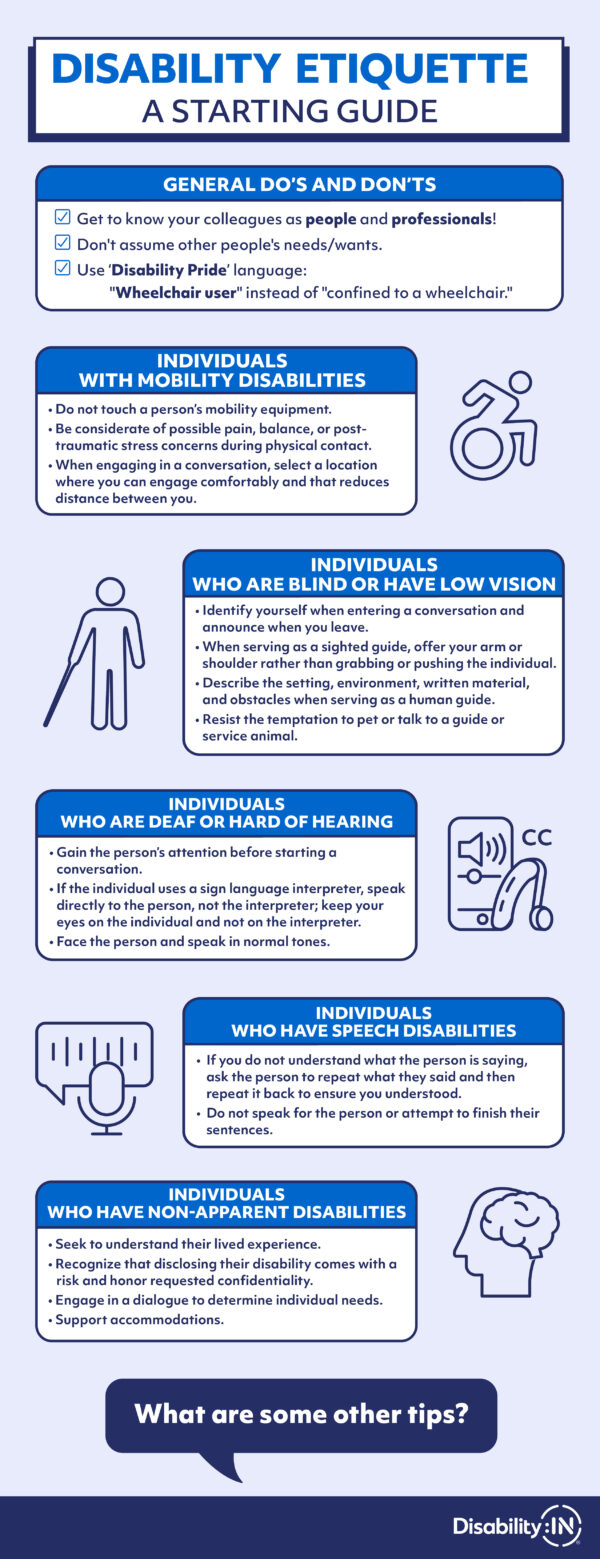
Helping Someone in a Wheelchair
A person’s wheelchair is part of their personal space. It is an extension of their body.
- NEVER touch, lean on, or push a person’s wheelchair without their explicit permission. This is a major violation of their personal space.
- If they ask you to push their chair, ask for instructions. “How would you like me to push? Please let me know if I am going too fast or too slow.”
- When pushing, be mindful of bumps, cracks in the pavement, and steep inclines. Announce them before you get to them.
- When you are done helping, make sure you leave the brakes on if you are on a slope. Ask them if they are in a good and safe spot before you leave.
- When talking to a wheelchair user for more than a few moments, try to find a seat for yourself. This puts you both at eye level and makes the conversation more comfortable and respectful.
Assisting a Person Who is Blind or Visually Impaired
If you see a person with a white cane or a guide dog who appears to need help, approach them and identify yourself.
- Ask, “May I assist you?” If they accept, ask where they are going.
- To guide them, offer your arm (usually your elbow). Do not grab their arm or shoulder. Let them take your arm. This allows them to control their own movement and feel the motion of your body.
- As you walk, act as a guide. Describe your surroundings. Mention obstacles like curbs (“We’re coming up to a curb down”), stairs (“There are five steps going up”), or overhanging branches.
- Be specific with directions. Instead of “it’s over there,” say “it’s about ten feet in front of you.”
- Never pet, distract, or feed a service animal. The dog is working, and its focus is essential for its owner’s safety.
Retrieving Dropped Items
If someone drops something, like a wallet, phone, or keys, ask if they would like you to pick it up. If they say yes, pick it up and hand it back to them directly. Don’t assume they want it placed in their bag or on their lap. Ask, “Where would you like me to put this for you?”
Navigating Stairs and Obstacles
If someone with a mobility aid is facing a set of stairs, don’t just assume they need help. They may have a specific technique, or they may be looking for a nearby ramp or elevator. You can ask, “Is there anything I can do to help with these stairs?” They might ask for physical support, or they might ask you to carry an item for them while they navigate the stairs themselves. Follow their lead completely.
Understanding Invisible Disabilities
Not all disabilities are visible. A person may have a condition like chronic pain, autism, a cognitive disability, or a mental health condition. These are often called invisible disabilities. Someone might seem anxious, confused, or overwhelmed without any obvious physical reason.
The rules of etiquette are the same.
- Be patient and kind.
- Don’t make assumptions about what they can or cannot do.
- If someone seems overwhelmed, you can ask quietly, “Is everything okay? Is there anything I can help with?”
- They might need a quiet space, clear and simple instructions, or just a moment to themselves. Offer help, but be prepared for them to decline. Respect their need for space.
Understanding Boundaries: The Etiquette for Helping Disabled Individuals
Knowing what not to do is as important as knowing what to do. Avoiding these common mistakes will ensure your actions are truly helpful and respectful. The best etiquette for helping disabled individuals focuses on respecting their personal boundaries.
Here is a list of actions to avoid:
- Do not provide physical contact without permission. Never grab someone’s arm, pat them on the back, or push them to “help” them along. This is startling and a violation of their personal space. Always ask first.
- Do not touch or move a person’s assistive devices. This includes wheelchairs, walkers, canes, crutches, or scooters. These devices are part of their personal space. Moving them, even with the intention to be helpful, can be disorienting and dangerous.
- Do not make decisions for them. Don’t assume you know what they need or where they are going. Ask them. Let them lead. Your role is to assist, not to take over.
- Do not ask personal questions about their disability. It is rude to ask, “What happened to you?” or other invasive questions about their medical history. Their disability is a private matter. Focus on the task at hand, not their life story.
- Do not talk down to them or use patronizing language. Avoid terms of endearment like “sweetie” or “honey.” Speak to adults as adults, with respect.
- Do not be offended if your help is declined. Remember, their “no” is not a rejection of you. It is an affirmation of their own independence and capability. Respecting their answer is a powerful way to show your support.
- Do not hover. If your offer of help is declined, simply move on. Hovering or staring can make a person feel self-conscious and uncomfortable.
Conclusion: Kindness Guided by Respect
Learning how to help a disabled person in public is not about memorizing a long list of complicated rules. It boils down to a few simple, powerful ideas: see the person first, respect their independence, and let them be the expert.
The key takeaways are:
- Observe first. Take a moment to see if help is genuinely needed.
- Ask before you act. Always offer assistance and wait for a clear “yes.”
- Listen and follow instructions. Let them tell you how to best help them.
- Respect their decision. If they say no, accept it gracefully.
True helpfulness isn’t about being a hero or swooping in to save the day. It’s about being a considerate and respectful member of the community. It’s about offering support in a way that empowers people, rather than taking away their power.
By using these tips, you can confidently offer assistance when you see a need. You can be an ally who helps create a more inclusive and supportive world for everyone. The next time you feel that urge to help, you will know exactly how to do it with kindness, dignity, and respect.
Frequently Asked Questions (FAQ)
What’s the most important thing to remember when wanting to help someone with a disability?
The golden rule is to always ask before you act. Never assume help is needed or wanted. A simple, “Would you like some help?” respects their autonomy and independence.
How should I guide a person who is blind or visually impaired?
If they accept your offer of assistance, offer them your arm (usually at the elbow). Let them take your arm, rather than you grabbing theirs. Walk at a normal pace and communicate clearly about obstacles like curbs or stairs.
Is it okay to touch or move someone’s wheelchair or walker?
No. You should never touch, lean on, or move a person’s assistive devices without their explicit permission and instructions. These items are considered part of their personal space.
What if I offer help and the person says no?
Respect their decision completely. Do not insist or ask if they are sure. A simple “Okay, have a good day” is the perfect response. Respecting their refusal is a key part of disability etiquette.